 DoodleGrove
Bat Facts for Kids: 15 Things to Learn While You Color
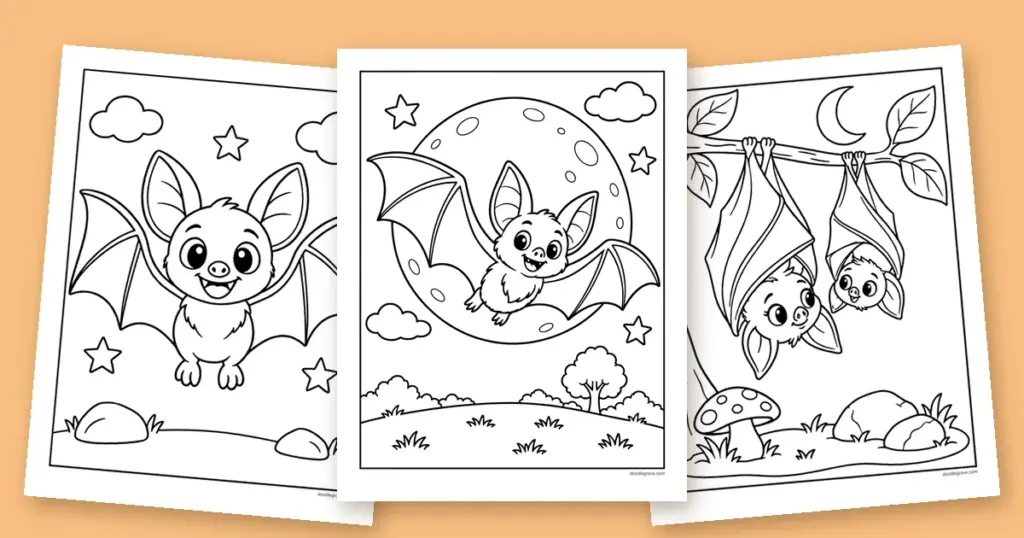
Bats swoop through every Halloween, but they are also one of the most fascinating animals a child can learn about. These bat facts for kids give you fifteen true, kid-friendly things to share, and each fact comes with a free bat coloring page so your child can draw what they just learned.
Every coloring page here is free to print with no sign-up, sized for both US Letter and A4 paper. Print one page or the whole set, color at the kitchen table or in the classroom, and talk through a new fact with each sheet. For the sharpest black lines, see our printing guide.
We checked every fact below against the science sources listed at the end of this page, so you can read them out loud with confidence. Ready? Hang on tight, because we are starting upside down.
Meet the bats: the only mammals that fly
1. Bats are the only mammals that can truly fly
Plenty of animals glide, like flying squirrels, but only bats flap their way through the sky under their own power. A bat wing is really a hand: four long finger bones with a thin stretch of skin between them. That is why scientists gave bats the name Chiroptera, which means hand-wing.
2. There are more than 1,300 kinds of bats
Bats are not rare at all. Scientists have counted over 1,300 different species around the world, which makes bats the second-largest group of mammals, right behind rodents. They come in a huge range of sizes, colors and face shapes.
3. Bats live almost everywhere on Earth
You can find wild bats on every continent except Antarctica. They make their homes in deserts, forests, cities and farms, roosting in caves, trees, old buildings and even under bridges. Wherever people live, bats are usually nearby, quietly doing their work after the sun goes down.
How bats see with sound
4. Many bats find their food with echolocation
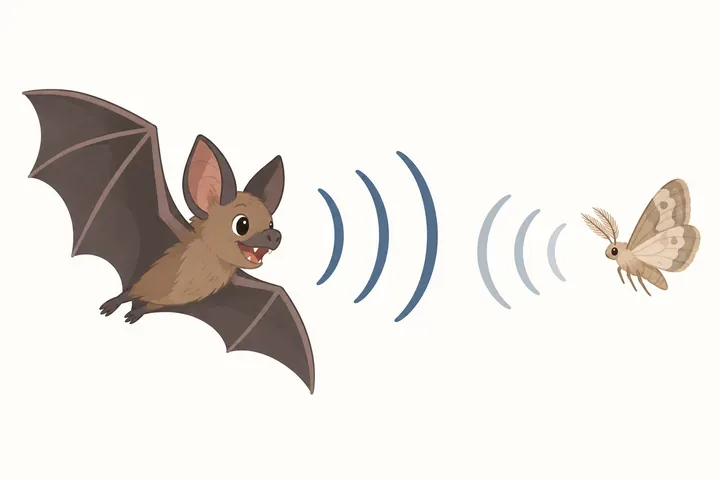
Most small bats hunt in the dark using echolocation. The bat makes quick, high squeaks, then listens for the echoes that bounce back off a moth or a tree. From those echoes it can tell how far away something is, how big it is and which way it is moving, building a sound map of the night.
5. Bats are not blind
Here is a myth to bust: no bat is blind. Every bat can see, and the big fruit bats actually have large, excellent eyes. Small bats simply lean on their ears at night the way you might feel your way across a dark room.
A day and night in a bat’s life
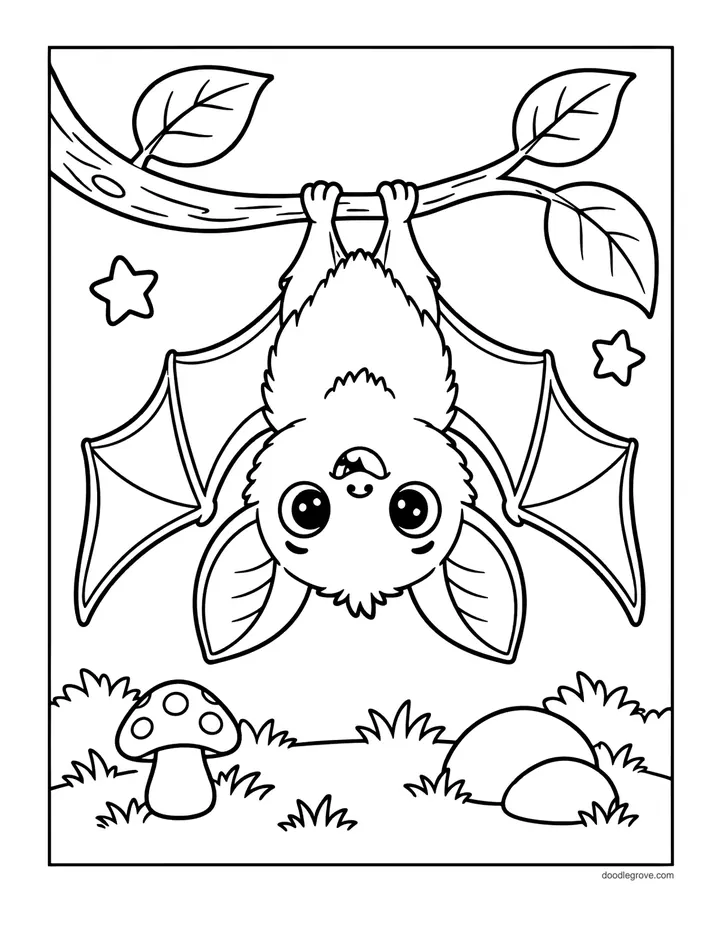
6. Bats rest hanging upside down
A resting bat hangs head-down from its back feet. A special locking tendon holds its toes shut with no effort at all, so a sleeping bat never falls. Hanging also means a bat can simply drop into the air to start flying, instead of taking a running start the way a bird does.
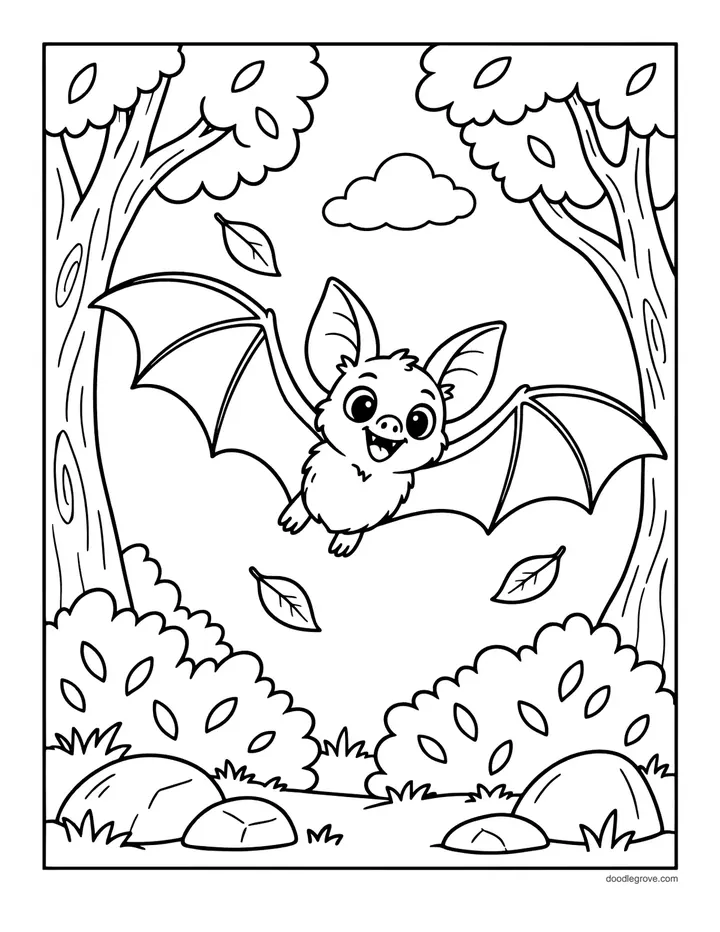
7. Most bats are awake at night
Bats are nocturnal. They sleep through the day in a safe roost and come out at dusk to feed, which keeps them away from daytime predators and the hot sun. A group of bats that shares a roost is called a colony.
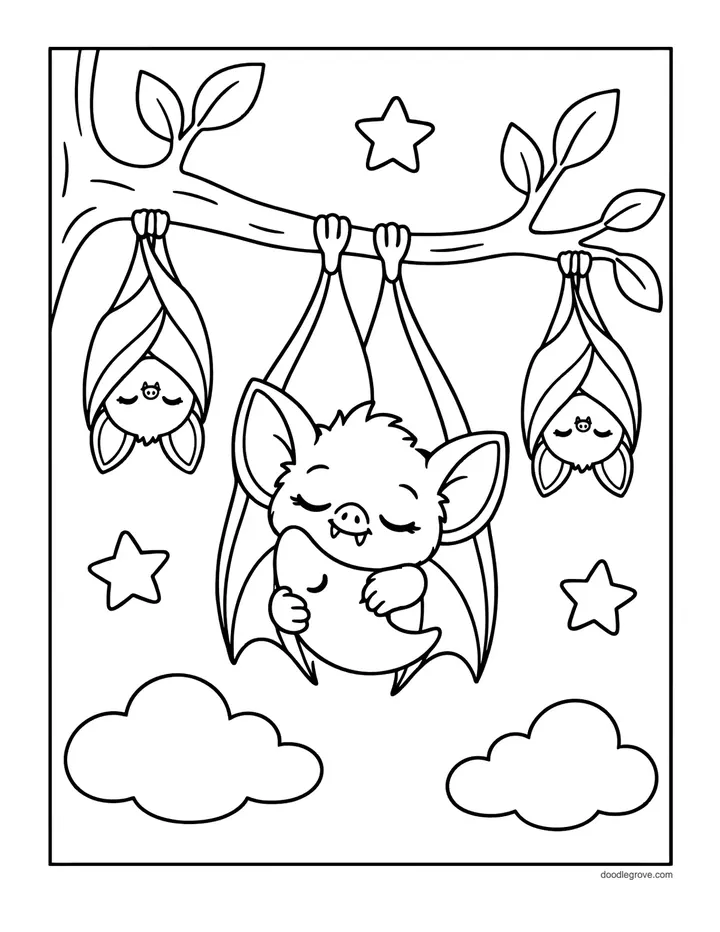
8. A baby bat is called a pup
A mother bat usually has one baby at a time, sometimes two, and a baby bat is called a pup. A newborn pup clings tightly to its mother or to the roost with its back feet. Mother bats feed their pups milk, just like every other mammal does.
The biggest and the tiniest bats
9. The smallest bat is about the size of a bumblebee
The tiny bumblebee bat, also called Kitti’s hog-nosed bat, weighs only about two grams, less than a penny. It is one of the smallest mammals in the whole world. It lives in a few quiet caves in western Thailand and nearby Myanmar, hunting tiny insects at dusk.
10. The biggest bats are the flying foxes
At the other end are the flying foxes, large fruit bats with furry, fox-like faces. The biggest ones have wings that stretch about five feet from tip to tip. They live in warm places from Africa to Australia and use their eyes, not echolocation, to find fruit.
What is on a bat’s menu
11. Most bats eat insects, and they eat a lot
Most kinds of bats eat insects such as moths, beetles and mosquitoes. An insect-eating bat can eat half of its own body weight in bugs, or even more, in a single night. That is why farmers and gardeners treat bats as free, friendly pest control.
12. Some bats drink nectar and pollinate flowers
Other bats sip sweet nectar from flowers and carry pollen from bloom to bloom, much like bees do. More than 500 kinds of plants depend on bats this way, including the agave plant. Next time you see a spiky agave, you can thank a bat.
13. Fruit bats help plant forests
Fruit bats eat fruit and then scatter the seeds as they fly, which helps new trees grow. In tropical rainforests, bats are some of the most important seed planters of all, dropping seeds across wide areas that other animals never reach.
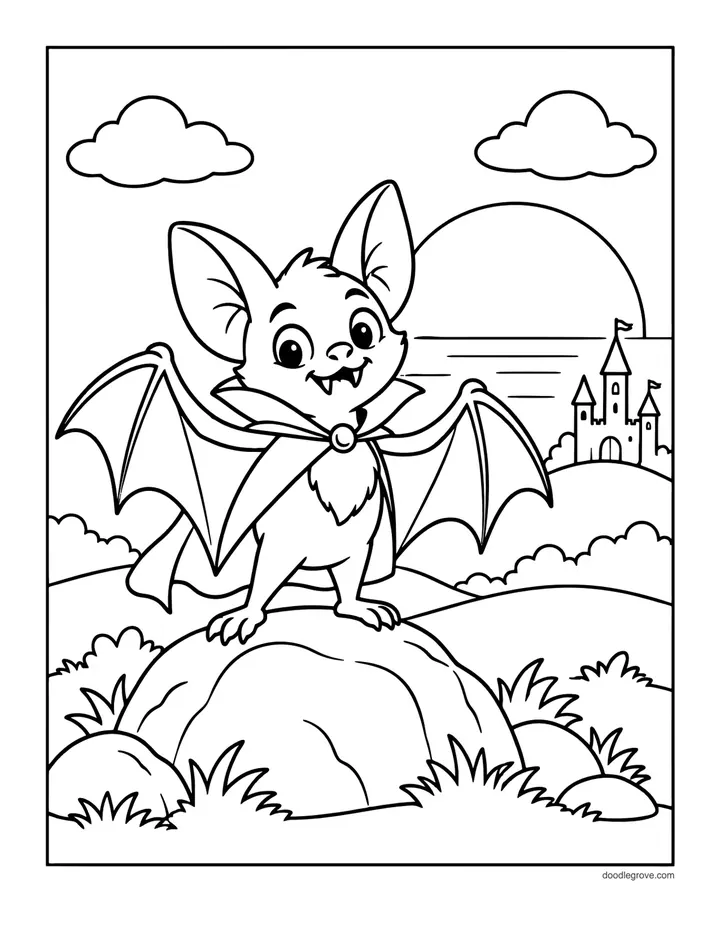
14. Only three kinds of bats drink blood
Vampire bats are real, but there are only three species, and they all live in Latin America, far from most of us. They feed on small amounts of blood from sleeping animals such as cattle, and they are the only bats that live on blood alone. The spooky vampire bat of Halloween costumes is mostly make-believe.
Where bats go in winter
15. Many bats hibernate or migrate when it gets cold
When winter arrives and the insects disappear, bats have two plans. Some bats hibernate, sleeping deeply in a cool, safe cave until spring. Others migrate, flying to warmer places where food is easier to find. A few do a little of both.
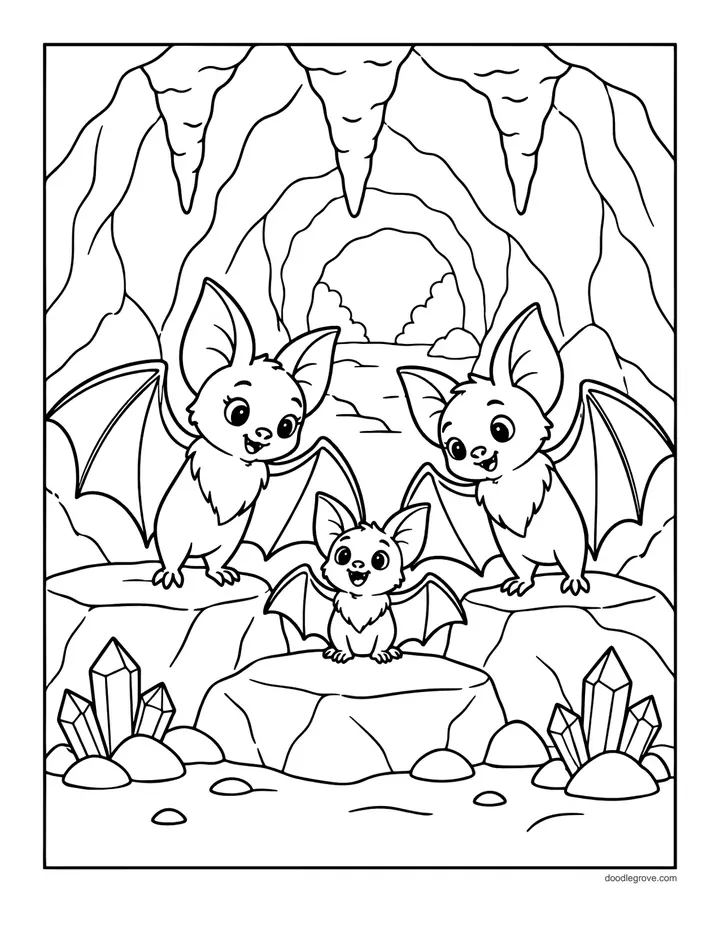
Color a whole bat night scene
Once you know the facts, turn them into a scene. Mix bats with pumpkins using Bat with a Pumpkin or Bat on a Candy Bucket, add ghostly company with Ghost and Bat Friends and Ghost with a Candy Bucket, and set out the candy with Trick or Treat Pumpkin Bucket. For more bats on the wing, try Bat Flying Past the Moon, Bats Across the Full Moon and Bat Under the Stars, or cozy resting bats in Two Bats Hanging Out, Bat Hanging from a Branch and Bat in the Crystal Cave. When you want to get up and move, the Catch the Flying Bats game in our Halloween party games for kids turns these facts into play, and our easy Halloween crafts for preschoolers show how to fold a bat page into a headband or a hanging mobile.
FAQ
Where do these bat facts come from?
Each fact was checked against the sources listed at the end of this page: National Geographic, the U.S. National Park Service and the University of Michigan’s Animal Diversity Web. Then we wrote it in simple words for children and left out any number the sources did not agree on.
What should we do if we find a bat at home?
Never touch a bat with your bare hands. Keep children and pets away, open a window or door so it can leave on its own, and if it stays, ask an adult to call your local animal control. A calm, hands-off approach keeps everyone safe, including the bat.
How can kids help bats?
Leave roosting bats alone, keep an old tree standing when you can, and plant night-blooming flowers that feed nectar bats. Turning off extra outdoor lights at night also helps bats hunt. Small kindnesses add up for an animal that does so much for us.
Which bat coloring pages are easiest for younger children?
Start with the Easy pages, which have bigger shapes and fewer tiny details. Simple Smiling Bat, Fluffy Baby Bat and Bat Wrapped in Its Wings are all good first pages for little hands.
More bat coloring pages
- Bat Coloring Pages: more than 20 bats to color, from a simple smiling bat to detailed cave and crystal scenes.
- Ghost Coloring Pages: friendly, not-scary ghosts to keep your bats company on the page.
- Pumpkin Coloring Pages: pumpkins and jack-o’-lanterns to round out a whole Halloween night scene.
Sources: National Geographic: Bats, U.S. National Park Service: Benefits of Bats, Animal Diversity Web (University of Michigan): Bats, Animal Diversity Web: Bumblebee Bat.

Hung designs T-shirt artwork for a living and prints coloring pages for his own kids at home. Every page on DoodleGrove is prepared for print the same way he prepares work for his clients.