 DoodleGrove
Pumpkin Life Cycle for Kids: From Seed to Pumpkin With Coloring Pages
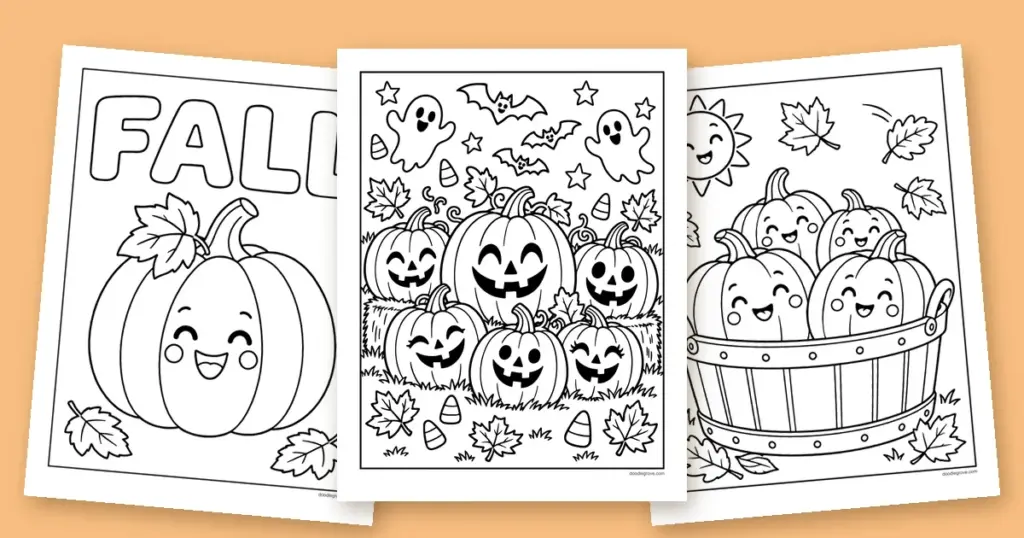
The pumpkin life cycle for kids is one of the friendliest science lessons of the whole fall, because the entire story fits on one table: a handful of seeds, a few pictures, and a real pumpkin to hold. This guide walks through every stage in plain words a five- to ten-year-old can follow, from a single flat seed to a ripe orange pumpkin. Each stage is paired with a free coloring page so children can draw what they just learned, and the facts here were checked against the university growing guides and the Britannica entry listed at the end of this page, kept to a child-level summary.
Every coloring page linked below is free to print with no sign-up. Each one comes in US Letter and A4, so it works whether you are in a classroom in Ohio or at a kitchen table in Manchester. Print one page per child, or run the whole set as a take-home packet.
The pumpkin life cycle at a glance
A pumpkin is a fruit that grows on a long vine, in the same plant family as squash, melons and gourds. One plant begins as a single seed and, about three to four months later, gives you the big orange pumpkin you carve in October. Here are the five stages you will teach, in order.
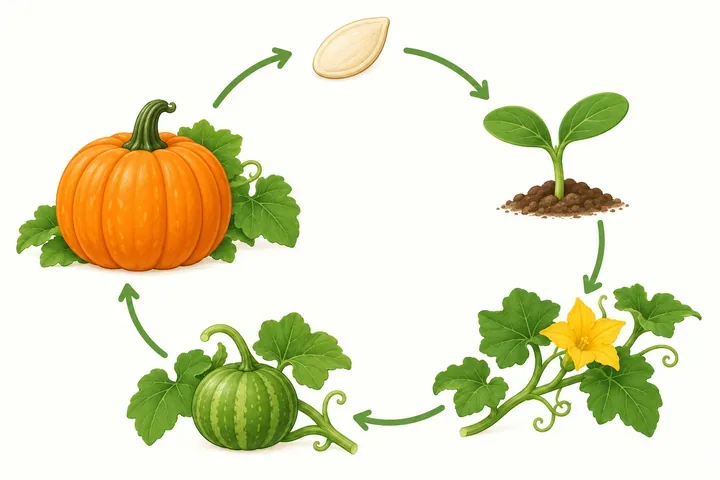
Use the table below as a quick plan for a science center or a week of morning work. Give younger children an Easy page and older children a Medium one.
| Stage | What happens | A page to color |
|---|---|---|
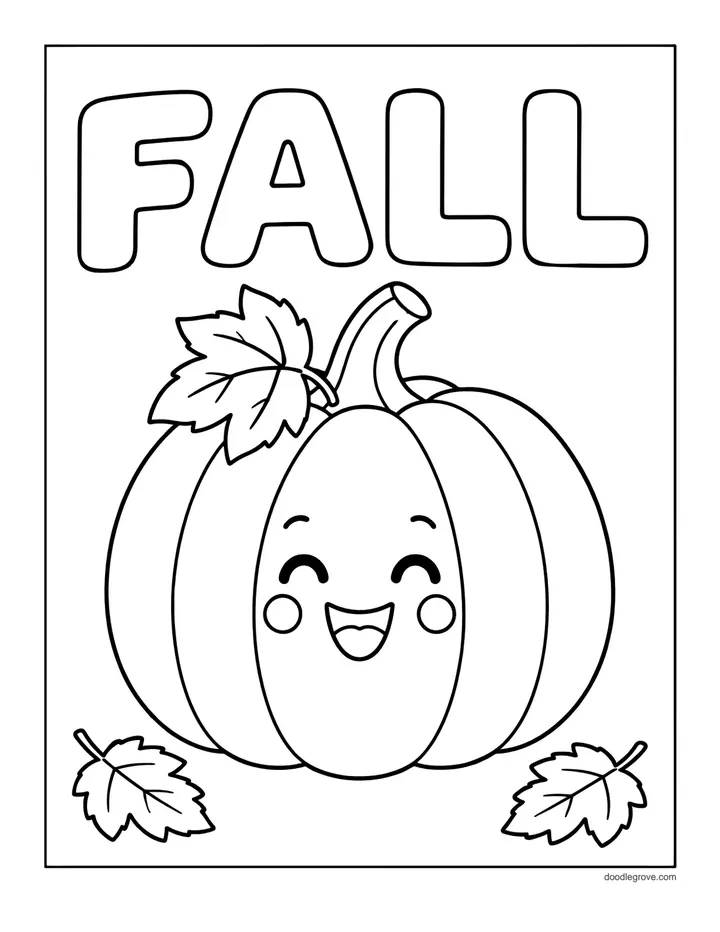
| 1. Seed | A flat, pale seed is planted in warm soil | Smiling Pumpkin (Easy) |
| 2. Sprout and vine | A green shoot pushes up and grows into a long vine | Pumpkins and Jack-o’-Lanterns (Medium) |
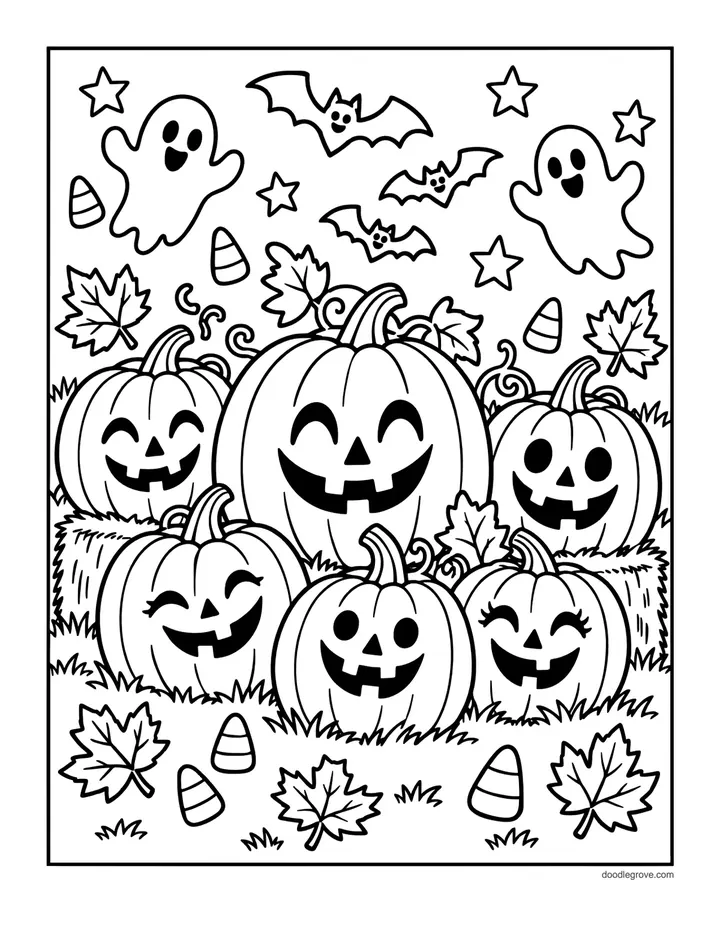
| 3. Flowers | Yellow flowers open and bees carry pollen | Pumpkin Patch Faces (Medium) |
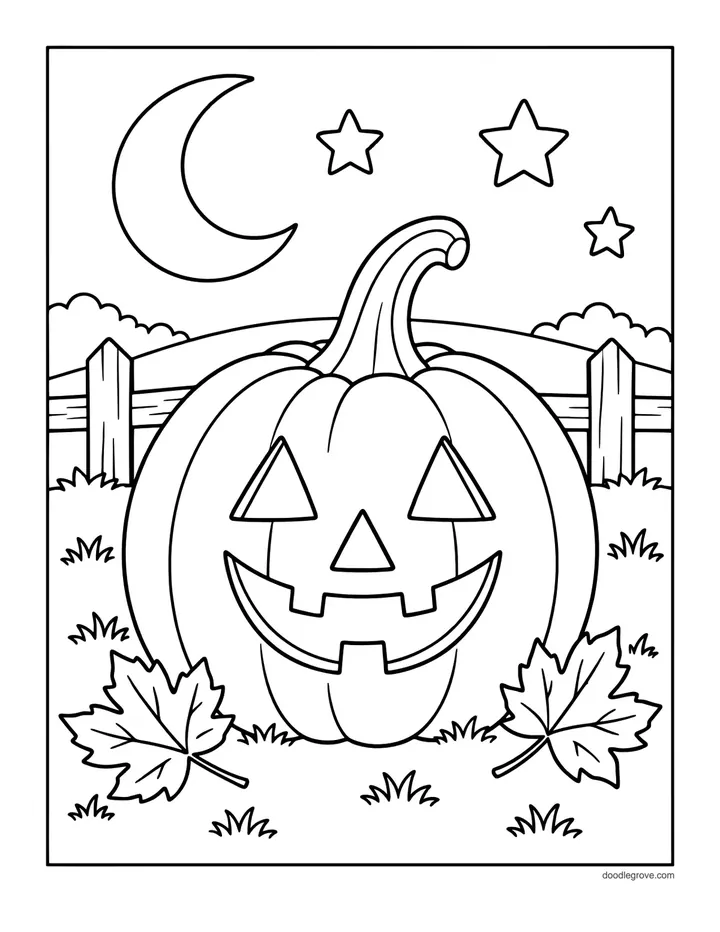
| 4. Green pumpkin | A small green fruit grows on the vine | Big Jack-o’-Lantern by the Fence (Easy) |
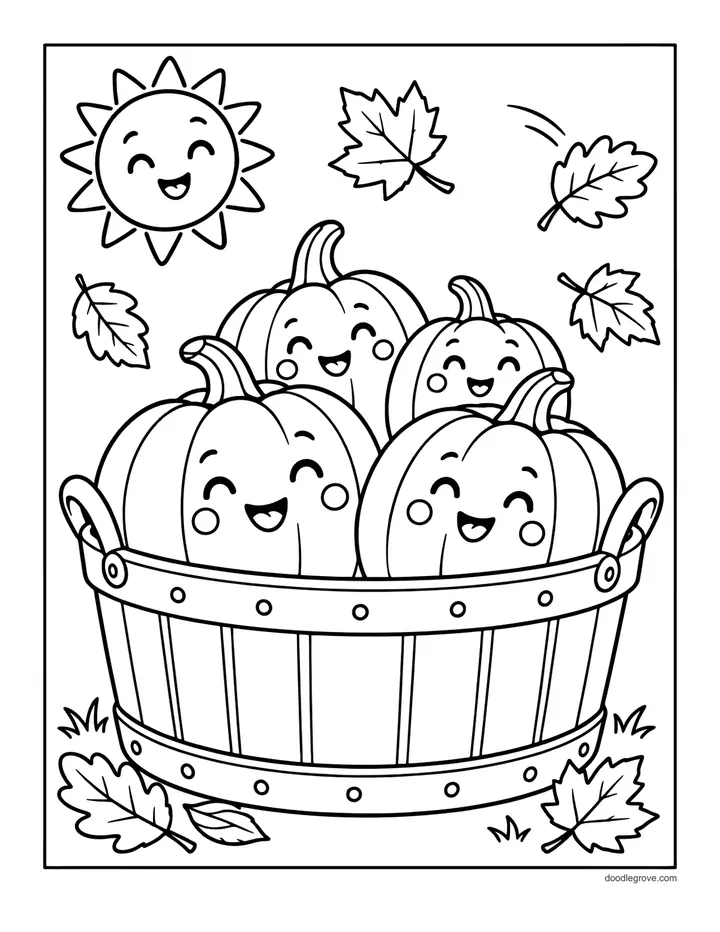
| 5. Ripe pumpkin | The fruit turns orange and is ready to harvest | Basket of Happy Pumpkins (Medium) |
From seed to vine: how a pumpkin plant begins
Stage 1: The seed
Every pumpkin starts as one flat, teardrop-shaped seed, pale cream on the outside. A gardener plants it about an inch deep once the soil is warm and the last frost has passed. That timing matters: a pumpkin is a warm-season plant, so a seed set in cold ground simply will not grow. Tucked inside that small seed is everything the plant needs to make its very first root and its very first leaves.
Stage 2: The sprout
Once the soil is warm, a little green shoot pushes up through the soil and unfolds its first two leaves. Those first leaves are called seed leaves, and they are the plant’s way of catching sunlight right away. Bigger, rougher leaves with jagged edges follow soon after. This is a lovely moment to grow alongside the lesson: plant a few seeds in a clear cup so children can watch a real sprout appear on the windowsill.
Stage 3: The growing vine
The young plant soon stretches out into a long vine that crawls across the ground. Pumpkin vines can grow several feet long, carrying wide flat leaves and curly green tendrils that grip anything they touch, like tiny springs. All summer the vine keeps reaching outward, soaking up sunlight and sending energy back to feed the fruit that is coming next.
From flower to pumpkin: how the fruit grows
Stage 4: Flowers and busy bees
By the middle of summer the vine is dotted with big yellow flowers. The plant actually makes two kinds: male flowers on thin stems, and female flowers with a tiny round swelling tucked at their base. Bees do the important work: they fly from the male flowers to the female flowers and carry pollen along with them. Once a female flower is pollinated, that little swelling behind it begins to grow. That is the start of a brand-new pumpkin.
Stage 5: From green pumpkin to orange
The baby pumpkin grows surprisingly fast. At first it is small and green, hiding among the leaves where it is hard to spot. As it ripens through late summer and early fall, it swells larger and slowly changes color, going from green to yellow to a deep sunset orange, while its skin turns hard and tough. From the day the seed is planted to this ripe orange stage, a pumpkin usually takes about 90 to 120 days.
Harvest, seeds and starting over
In early autumn the pumpkin is fully colored, its skin is hard, and the stem begins to dry and shrivel. Those are the signs a grower looks for: the pumpkin is ripe and ready to pick. When you cut one open, you find a scoop of stringy pulp and dozens of flat seeds, the very same kind of seed the whole story began with. Save a few, let them dry, and you can plant them next spring to start the cycle all over again. (Those seeds are also the pepitas that people roast and eat.) This is the part children love most, because it shows that a life cycle really does go in a circle.
Teach the pumpkin life cycle: a simple classroom lesson
Here is a short lesson, about twenty minutes, that you can run with the pages above and very little prep.
You will need:
- The five stage pages from the table, one set per child or group
- Crayons or colored pencils
- Optional: a few real pumpkin seeds and a clear cup of soil for a windowsill sprout
- Optional: a small real pumpkin to pass around
Run it like this:
- Hold up a seed (or point to the first picture) and ask what children think it will become.
- Walk through the five stages using the life-cycle picture near the top of this page.
- Hand out the stage pages and let each child color one, or color all five in order.
- Mix the colored pages up and have children put them back in the right order, from seed to ripe pumpkin.
- Finish by cutting open the real pumpkin to find the seeds, closing the circle.
For a bulletin board, glue the five colored stages around a ring with arrows between them, just like the picture above. If you are planning a whole fall unit, our Halloween classroom activities post has more coloring-based lessons, and the printing guide explains how to get crisp lines on either US Letter or A4.
Color a pumpkin patch and a Halloween scene
Once children know the stages, let them enjoy the fun side of pumpkin season. These pages keep the pumpkin theme going without any more facts to learn. Mix in a Pumpkin Boat, a Kitten in a Pumpkin, a whimsical Pumpkin Cottage or a Pumpkin Tree House for children who finish early. For classic shapes, there is a simple Classic Jack-o’-Lantern, a Happy Halloween Jack-o’-Lantern and a Pumpkin Show full of grinning faces.
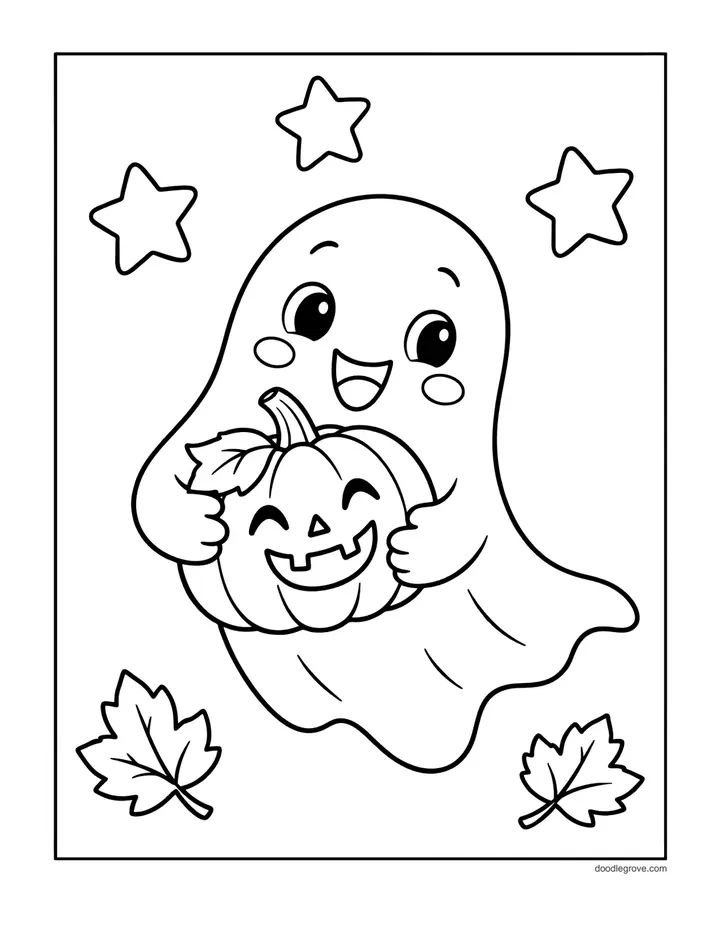
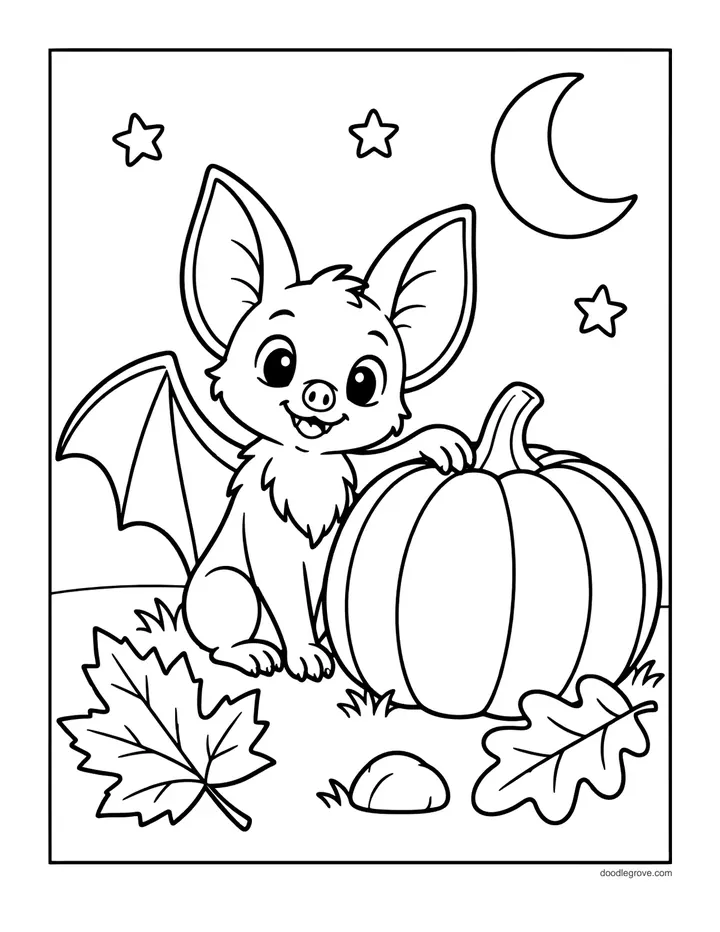
To turn it into a whole Halloween table, add a friendly Ghost Hugging a Pumpkin, a Ghost in a Pumpkin, a cute Bat with a Pumpkin or a Bat Flying Past the Moon. The littlest colorers can start with Halloween Icons for Little Kids, a Candy Corn Buddy or a Friendly Frankenstein. If children get curious about the bats on these pages, our bat facts for kids post answers what they eat, how they see in the dark and where they go in winter.
FAQ
How long does a pumpkin take to grow from seed to pumpkin?
Most pumpkins take about 90 to 120 days, roughly three to four months, from the day the seed is planted to a ripe orange fruit. The exact number depends on the variety, and bigger pumpkins are not always slower than small ones.
Is a pumpkin a fruit or a vegetable?
A pumpkin is a fruit. It grows from a flower and holds the plant’s seeds inside, which is what makes a fruit a fruit. In the kitchen people often cook it like a vegetable, but on the vine it is a true fruit, in the same family as squash and melons.
Why do pumpkins change from green to orange?
A young pumpkin is green so it blends in with the leaves while it grows. As it ripens in the fall sunlight, the green slowly fades and warmer colors take over, turning it from green to yellow to orange. The color change is the plant’s way of showing the fruit is finished growing.
Can we grow a pumpkin from the seeds inside one we bought?
Often, yes. Rinse and dry a few seeds, then plant them in warm soil in late spring after the last frost. They may take the whole summer, and a seed from a carved pumpkin can sometimes grow a pumpkin that looks a little different, which is part of the fun.
More pumpkin and Halloween coloring pages
- Pumpkin Coloring Pages: plain pumpkins, jack-o’-lanterns and whimsical pumpkin houses for every stage of the lesson (21 pages)
- Halloween Coloring Pages: friendly Halloween scenes and simple icon pages for little hands (20 pages)
- Ghost Coloring Pages: cheerful, not-too-spooky ghosts, many holding pumpkins (17 pages)
- Bat Coloring Pages: cute bats from Easy smiling faces to Detailed cave scenes (21 pages)
Sources: University of Illinois Extension: Growing Pumpkins, Penn State Extension: Pumpkin Production, Britannica: Pumpkin.

Hung designs T-shirt artwork for a living and prints coloring pages for his own kids at home. Every page on DoodleGrove is prepared for print the same way he prepares work for his clients.