 DoodleGrove
Skeleton Facts for Kids: Name the Bones as You Color
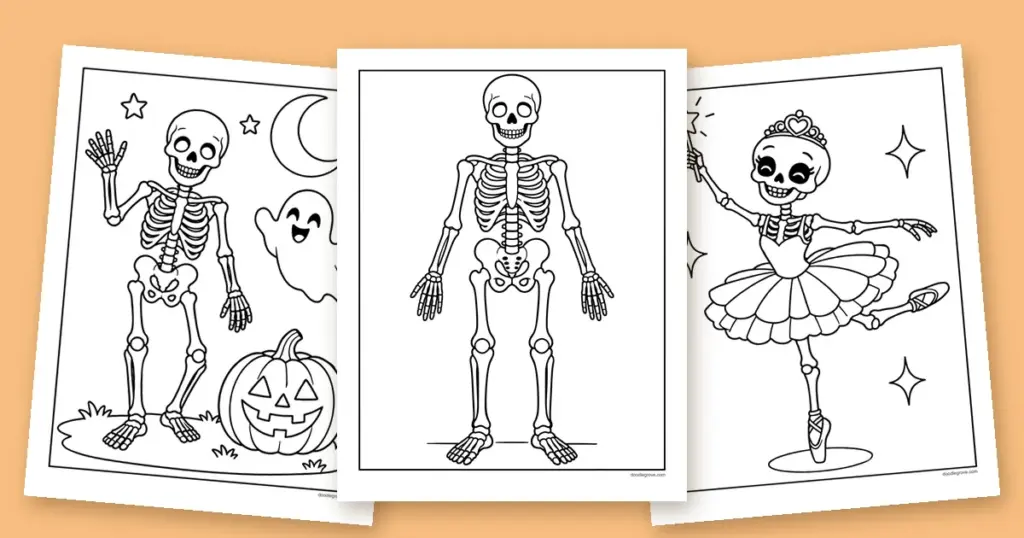
Looking for skeleton facts for kids that actually stick? The trick is to put the facts in children’s hands. When a child colors a skeleton, every rib, every finger bone and the big round skull are right there to point at and name. This guide pairs simple, true facts about the human skeleton with free skeleton coloring pages, so kids learn where their bones are while they color.
Every coloring page here is free to print with no sign-up. Each one comes in US Letter and A4, so it works on a home printer or a classroom copier. Print one skeleton per child, or run off a stack for a whole science lesson.
Meet your skeleton: the frame inside you
Your skeleton is the frame of bones inside your body. It holds you up, gives you your shape, and lets you move every time your muscles pull on it. A grown-up’s skeleton has 206 bones, from the dome of the skull all the way down to the tiny bones in the toes.
Bones also meet at places called joints, like your elbows, knees and knuckles. Joints are where your body bends. Your muscles are attached to your bones, and when a muscle pulls, the bones move at the joint, which is how you walk, wave and dance. A skeleton is not just a frame to look at; it is the moving part of you that every muscle needs.
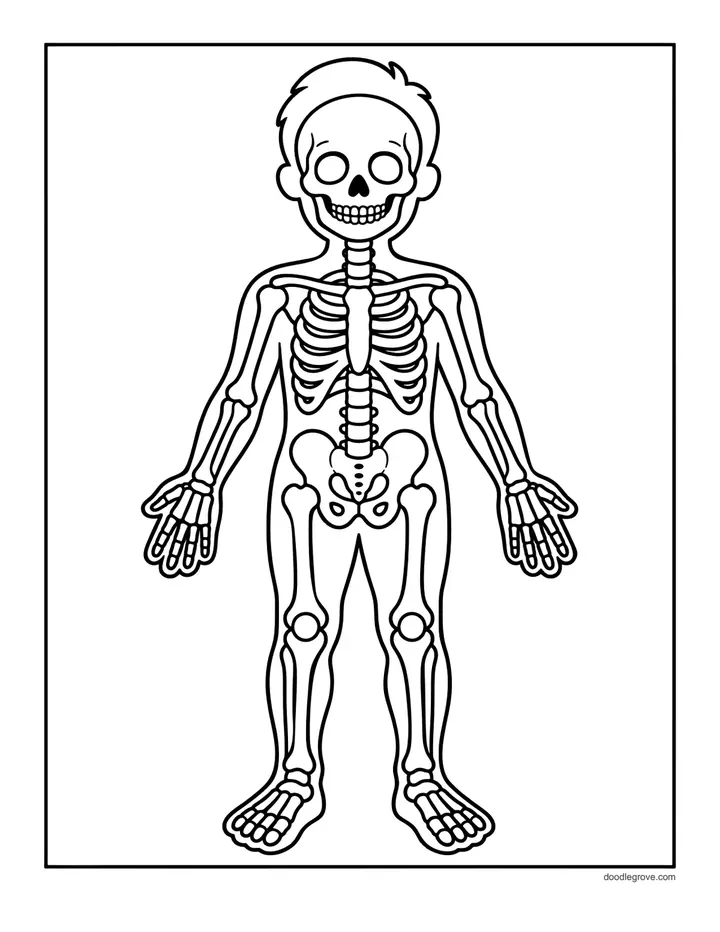
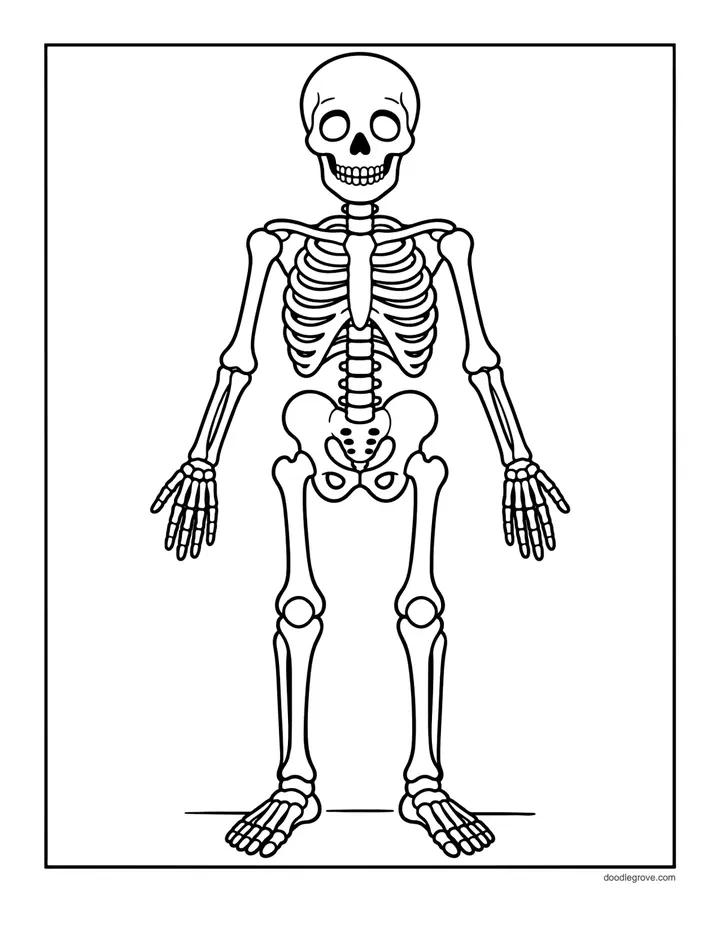
The best way to show a child what is inside them is to let them see it. The Skeleton Inside a Body page draws a full skeleton inside the outline of a standing child, so a young learner can match each bone to their own body. The Standing Skeleton page shows the same bones on their own, clear and simple, ready to be named one at a time.
Name the bones as you color
You do not need big science words to teach the main bones. Color one part at a time, say its everyday name first, then its science name. Here are the bones most children can find on the Standing Skeleton page.
| Body part | Everyday name | Science name |
|---|---|---|
| Head | Skull | Cranium |
| Lower face | Jawbone | Mandible |
| Chest | Rib cage | Ribs |
| Back | Backbone | Spine |
| Upper arm | Arm bone | Humerus |
| Thigh | Thigh bone | Femur |
| Lower leg | Shin bone | Tibia |
Do not forget the hands and feet, because they are full of tiny bones. There are 27 bones in each hand and wrist and 26 in each foot. That is why your fingers and toes can make so many small, careful movements, like holding a crayon or wiggling in your shoes.
Amazing facts about your bones
These skeleton facts for kids are all simple and true, and each one pairs with a bone you can point to on the page.
You were born with about 300 bones
A grown-up has 206 bones, but a baby starts with about 300. Many of a baby’s bones are soft and bendy at first. As a child grows, those bones slowly join together, so by the time you are grown you have 206. Your skeleton is still changing right now.
The femur is your longest and strongest bone
The femur, or thigh bone, runs from your hip to your knee. It is the longest and strongest bone in your whole body, and it holds you up every time you stand, walk or jump. Find it on the Standing Skeleton page and color it a bold color so it stands out.
The smallest bone hides inside your ear
Your smallest bone is deep inside your ear. It is called the stapes, it is shaped like a tiny stirrup, and it is only about 3 millimeters long, smaller than a grain of rice. It helps pass sound along so you can hear.
Bones are alive, and they help make your blood
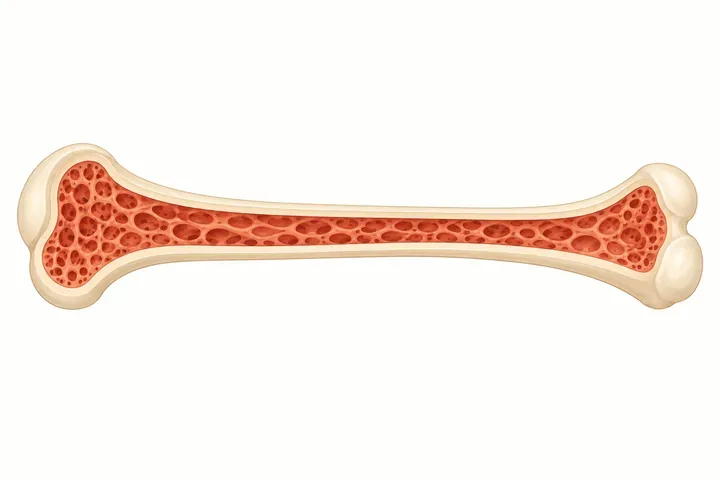
Bones are not dry sticks. They are living parts of your body that can grow and heal. Inside many bones is a soft, spongy part called bone marrow, and that is where your body makes new blood. Color the picture below to see the hard shell on the outside and the spongy marrow in the middle.
Your skull and ribs are built-in armor
Some bones have one big job: keeping the soft parts of you safe. Your skull is a hard helmet of bone around your brain, and your rib cage is a curved cage that guards your heart and lungs. When you color the rib cage, you are coloring your body’s own shield.
Do animals have skeletons too?
People are not the only ones with a skeleton. Dogs, cats, birds and fish all have bones inside them, and so did the dinosaurs. A dinosaur skeleton is simply the bones of a real animal that lived long, long ago. Color the T. Rex Skeleton to see how a giant meat-eater’s bones fit together, with its huge skull, curved ribs and long tail. The Titanosaur Skeleton page shows one of the biggest animals ever to walk the Earth.
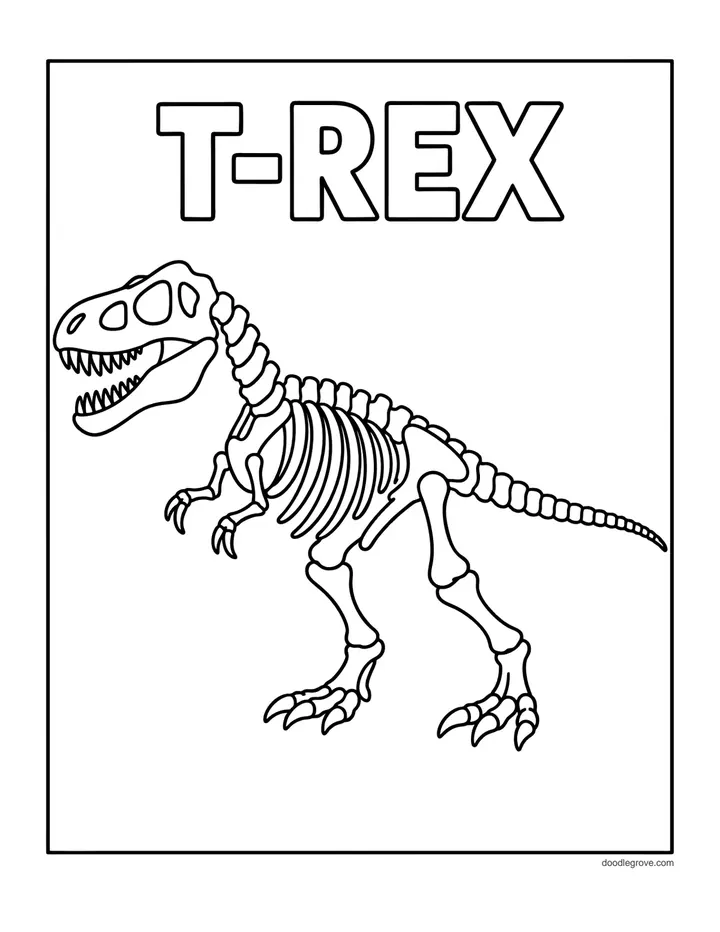
Comparing a human skeleton to a dinosaur’s is a fun way to see how all skeletons share the same ideas: a skull to protect the brain, a backbone down the middle, and ribs around the chest.
Build-a-skeleton: a quick classroom lesson
Here is a simple lesson that turns a coloring page into a science activity. It works for one child at the kitchen table or a whole class.
You will need:
- The Standing Skeleton page, one per child
- Crayons or colored pencils
- A pencil for writing labels
- Optional: scissors and a paper fastener for older kids
Then follow these steps:
- Color the bones, going slowly from the head down to the feet.
- Point to each part and say its name out loud, everyday name first, then the science word.
- Write a label next to three or four of the bigger bones, such as the skull, rib cage and femur.
- For older kids, cut the skeleton apart at the hips and pin it with a paper fastener so it can bend, just like a real joint.
- Compare your page to the Skeleton Inside a Body picture and find each bone on your own body.
For a bigger display, print the Skeleton Inside a Body page too and put the colored skeletons up on a Build-a-Body wall.
Color a playful skeleton crew
Bones do not have to be spooky. These skeletons are all smiles, which makes them friendly for younger children and perfect for a not-too-scary Halloween.
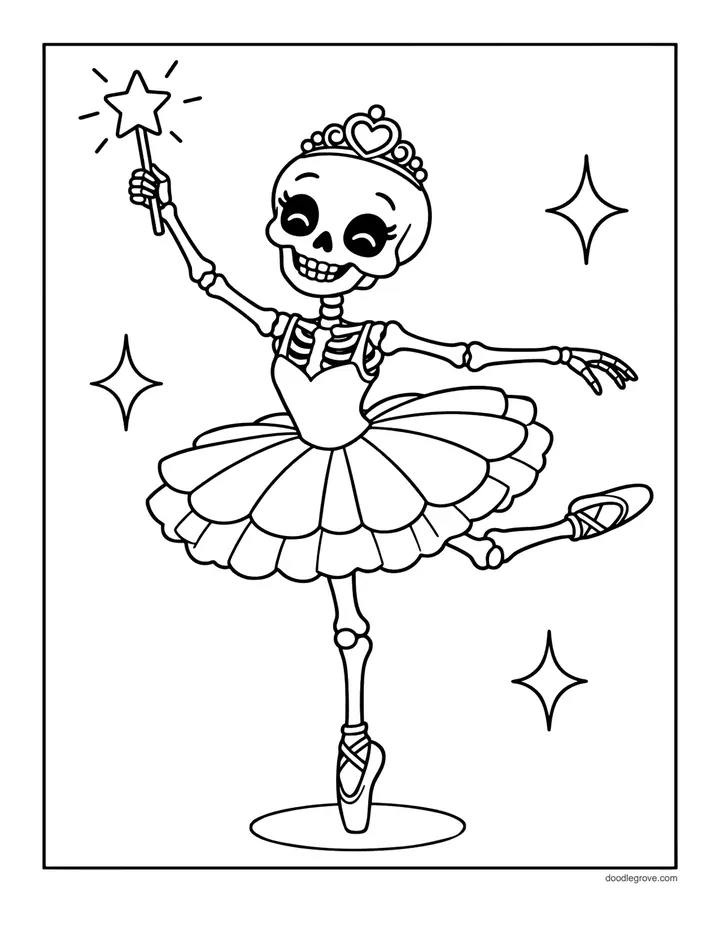
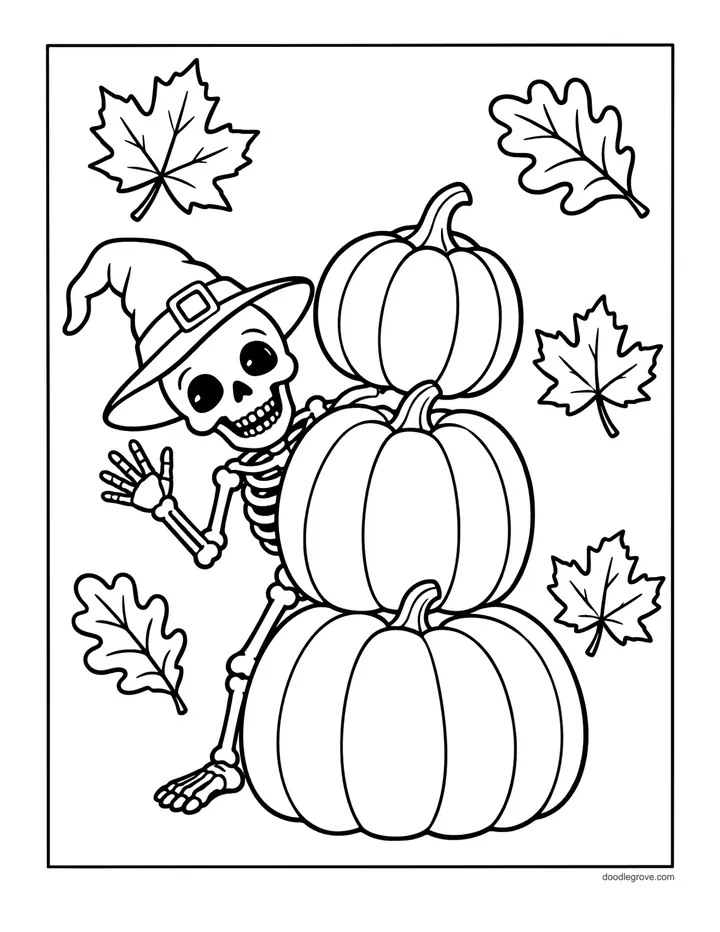
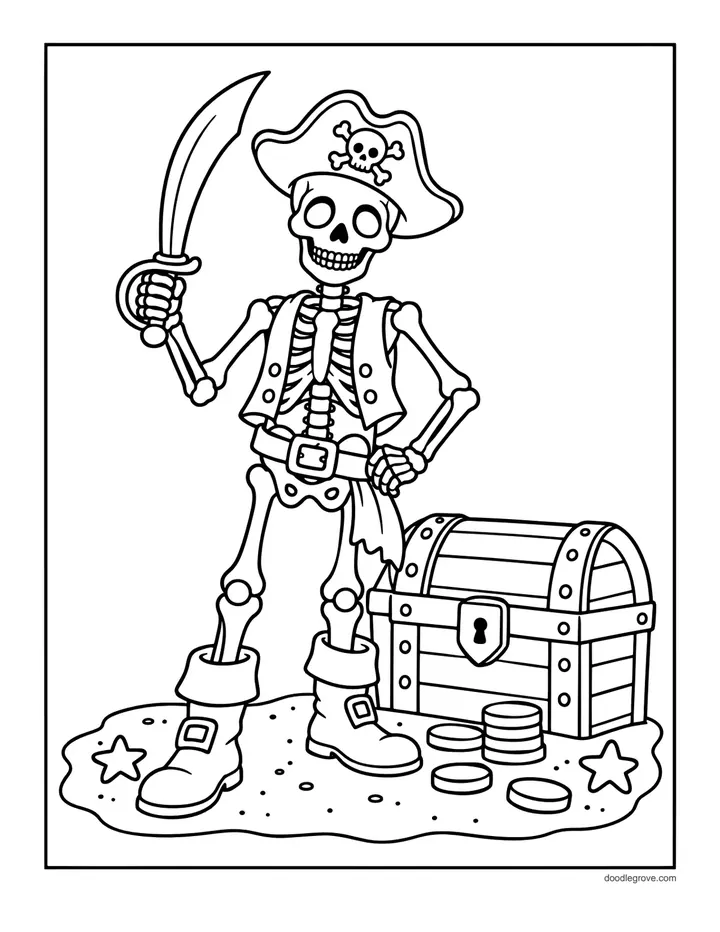
Mixing a playful skeleton in with a plain anatomy page keeps the lesson light. A child who has just learned the word femur will often spot the same leg bones on the dancing ballerina or the wrestler, which turns coloring time into quiet review. Let kids invent the colors, since a bright blue skeleton is just as correct as a white one and keeps young hands busy and happy for longer.
Pick a favorite character and give it your own colors:
- Waving Skeleton
- Happy Birthday Skeleton
- Superhero Skeleton
- Hot Dog Skeleton
- Fairy Skeleton
- Vampire Skeleton
- Wizard Skeleton
- Cowboy Skeleton
- Wrestler Skeleton
- Fiesta Skeleton with Maracas
- Pirate Skeleton with an Eye Patch
- Pirate Skeleton on the Beach
- Frankenstein Skeleton
- Santa Skeleton
- Skeleton with a Vampire Mask
- Grim Reaper Skeleton
- Skeleton Floating with Balloons
- Skeleton with a Broom and Candy
- Jack-o’-Lantern Costume Skeleton
- Skeleton on a Broomstick
Choosing colors for a spooky scene is part of the fun. Our Halloween color palette guide has easy tips for coloring pumpkins, ghosts and night skies, and our printing guide shows the best paper and settings before you run off a big batch. If your kids like learning while they color, try our Bat Facts for Kids post for another animal to meet.
FAQ
How many bones does a child have compared to an adult?
Babies are born with about 300 bones. As a child grows, many of those bones slowly join together, so a grown-up ends up with 206. That is why a child’s skeleton is still changing as they get bigger.
What is an easy way for teachers to introduce the names of the bones?
Start with the everyday name, then add the science word. Point to the skull and say head, then cranium; point to the thigh and say thigh bone, then femur. Coloring one bone at a time keeps it slow enough to remember.
Are these skeleton pages too spooky for younger children?
Most are friendly and smiling, like the Waving Skeleton and the Ballerina Skeleton, so they suit preschoolers. Save the Grim Reaper Skeleton or the Vampire Skeleton for older kids if you prefer a gentler set for little ones.
Do other animals have skeletons too?
Yes. Dogs, birds, fish and dinosaurs all have skeletons inside them. Coloring the T. Rex Skeleton next to a human skeleton is a great way to compare how they are alike and how they are different.
More skeleton coloring pages
- Skeleton Coloring Pages: realistic skeletons for learning the bones plus friendly costume skeletons for Halloween (25 pages)
- Dinosaur Coloring Pages: dinosaurs of every kind, including two fossil skeletons to color (39 pages)
Sources: UC Davis Health: Bone Basics, MedlinePlus (NIH): Long bones, Britannica: Stapes, Britannica: Human skeleton.

Hung designs T-shirt artwork for a living and prints coloring pages for his own kids at home. Every page on DoodleGrove is prepared for print the same way he prepares work for his clients.