 DoodleGrove
Halloween Color Palette Guide: How to Color Pumpkins, Ghosts and Witches
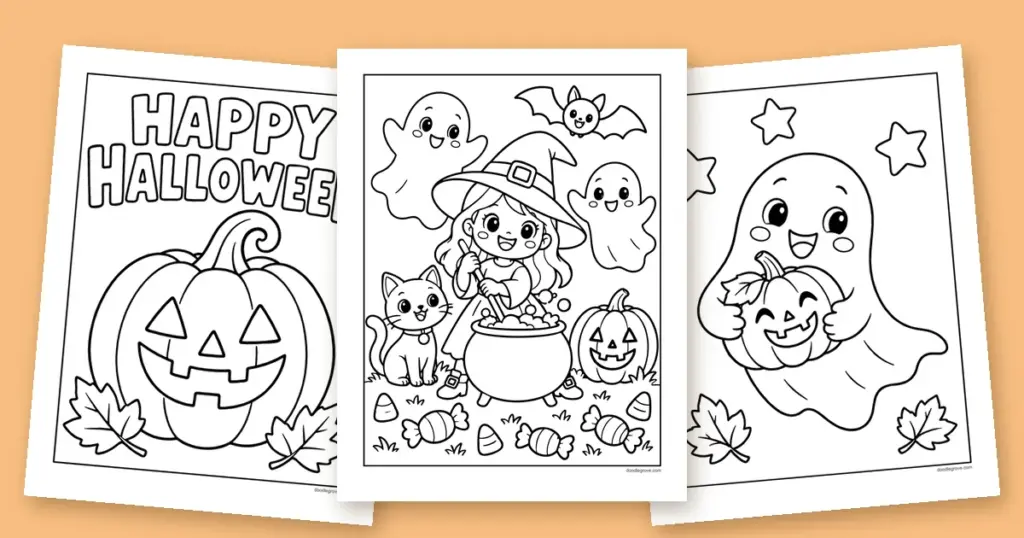
If your child can color a shape but is not sure what to do with it, a little color planning changes everything. This guide gives you a simple Halloween color palette and a few easy shading tricks, then shows exactly how to use them on pumpkins, ghosts, witches and bats. Every example is built on a free DoodleGrove coloring page, so you can print it, grab some crayons and try the idea in the next five minutes.
Every page linked here is free to print for home, classroom and family use, with no sign-up and no watermark. Each one is set up for both US Letter and A4 paper, so it prints cleanly wherever you are.
Your five-color Halloween palette
You do not need a giant box of colors for a great Halloween page. Almost everything on these pages can be colored with a small, friendly set. Pick three or four of these for any single page and it will already look pulled together:
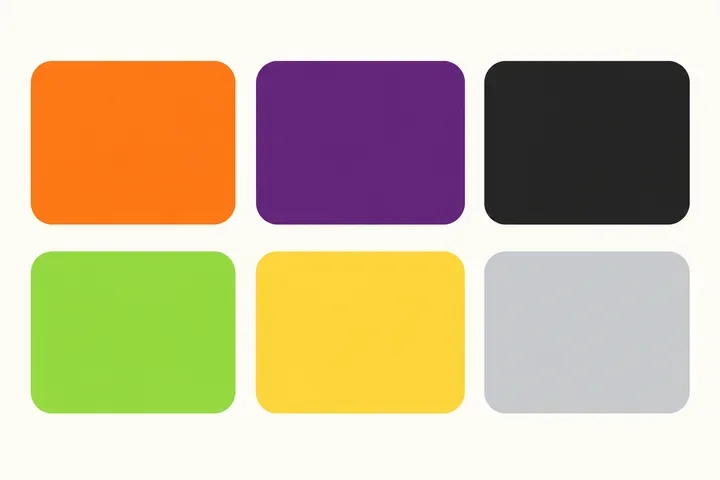
- Pumpkin orange for jack-o’-lanterns, candy and warm glows.
- Deep purple for night skies, witch dresses and shadows.
- Black or charcoal for bats, cats, hats and outlines.
- Lime or witchy green for potions, slime and monster skin.
- Candy corn yellow for moons, stars, candy and windows that look lit.
- Pale gray for ghosts, gravestones and spider webs.
A good warm-up is a sampler page. The Halloween Things to Color page mixes a ghost, a bat, a potion bottle, a witch hat and more on one sheet, so kids can test the whole palette before they start a big scene. The Four Potion Bottles page is another easy place to play, because potions can be any color at all.
Pick your tools and learn one shading trick
The tool your child uses changes how the page feels, and all three common ones work well:
- Crayons are bold and fast, perfect for younger kids and for solid, bright Halloween shapes.
- Colored pencils are best for shading, because you can press lightly or hard to get light and dark from the same color.
- Markers give the brightest, most even fill, which suits potions, candy and glowing moons.
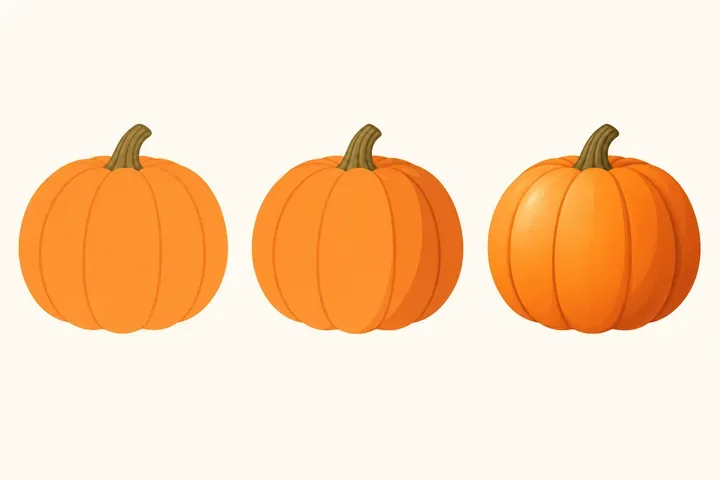
The one trick that makes any page look better is simple: start light, build up the dark, and leave a highlight. Color the whole shape lightly first. Then press harder along one side, usually the bottom or the side away from the moon, to add a shadow. Finally, leave one small patch barely colored so it reads as a shine. The three pumpkins below use the exact same orange, only pressed differently.
How to color a pumpkin
Pumpkins are the easiest win on any Halloween page, and the shading trick above was made for them. Color the body a light orange, then deepen the orange down the sides and into the grooves between the ribs. Leave the top of each rib lighter so the pumpkin looks round instead of flat. The stem is a soft brown or green, never orange, which instantly makes the pumpkin look real.
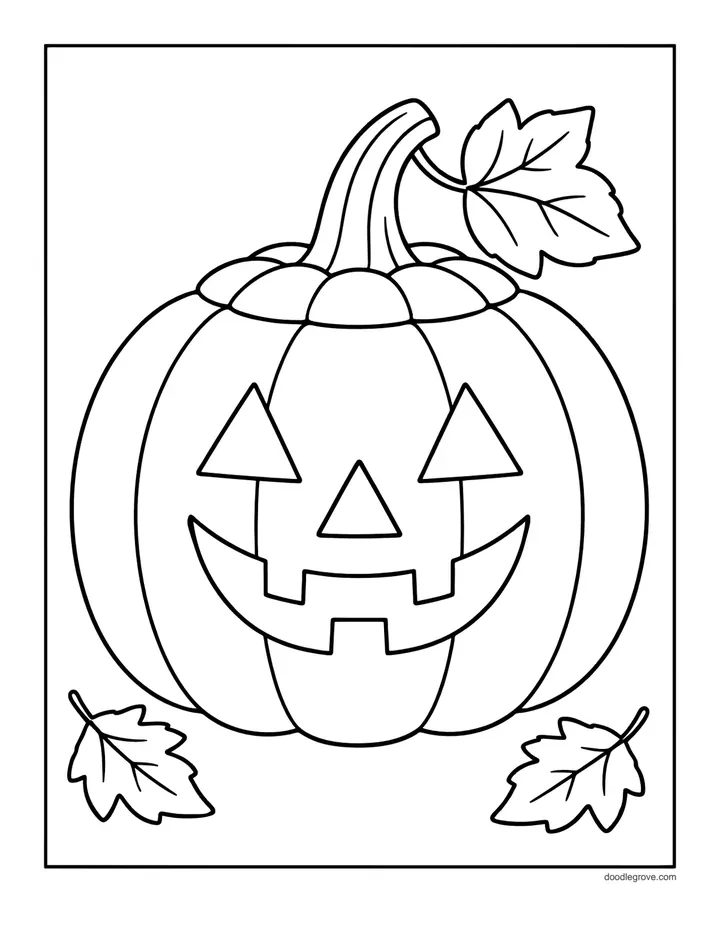
For a carved jack-o’-lantern, the secret to a glowing face is color, not black. Fill the cut-out eyes and mouth with bright yellow, then add a touch of orange around the edges of each opening so the light looks like it is spilling out. The Classic Jack-o’-Lantern above is ideal for this because the face is big and simple. When your child wants more pumpkins to practice on, the Pumpkin Patch Faces page has a whole pile of them, which is a great chance to try slightly different oranges on each one. The Happy Halloween Jack-o’-Lantern and the Big Jack-o’-Lantern by the Fence are two more good single-pumpkin pages. If your kids get curious about how a pumpkin grows that orange in the first place, our pumpkin life cycle for kids post colors that story in stages.
How to color a ghost
A white ghost is the page kids most often leave blank, which is a shame, because a ghost is a chance to be clever. The body can stay mostly white, but trace the outline and the bottom curves with a pale gray or soft blue to give it shape. A tiny bit of the same gray under the arms and chin makes the ghost look round rather than like a plain blob.
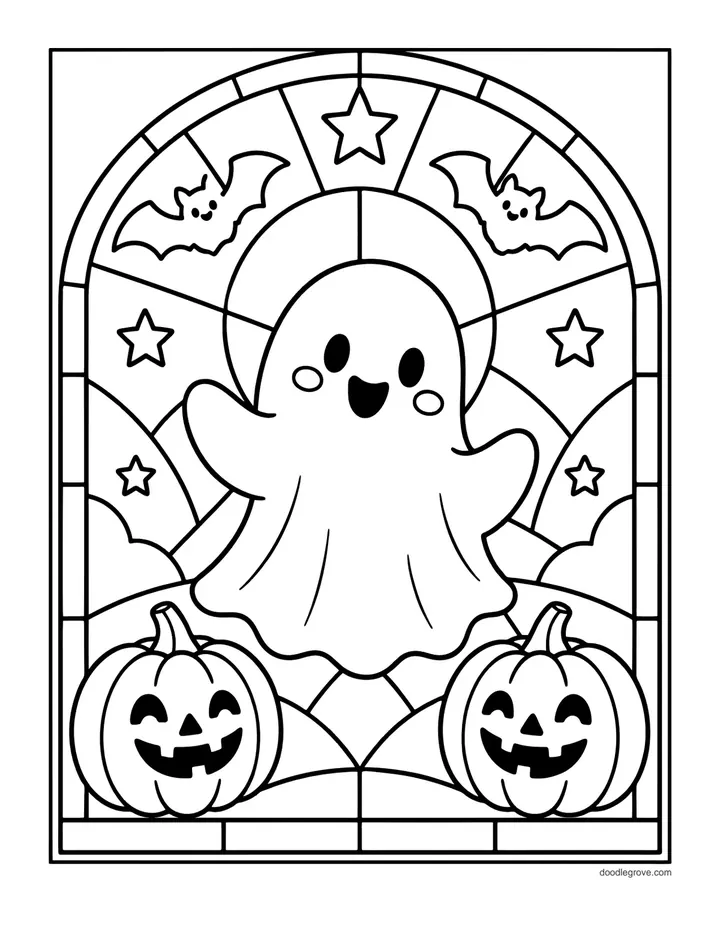
The real trick with ghosts is the background. A white ghost only pops when something dark or colorful sits behind it, so fill the sky with deep purple or navy and let the pale ghost shine against it. The Stained Glass Ghost above is perfect for this, because the stained glass panels around it beg for bold color while the ghost stays soft in the middle. For a gentler page, Ghost Hugging a Pumpkin pairs a pale ghost with a warm orange pumpkin, Ghosts Over a Jack-o’-Lantern gives you a dark, starry sky to color behind a group of ghosts, and Happy Boo Season is another cheerful ghost page to try the same trick on.
How to color a witch
Witches are where the palette really comes to life, because almost every color has a place. A classic witch mix is a deep purple or black dress, a green or purple hat, and a warm skin tone, with orange or yellow as the trim on the hat band and the boots. Keep the dress one main color and let the little details carry the brighter shades, so the page does not turn into a rainbow.
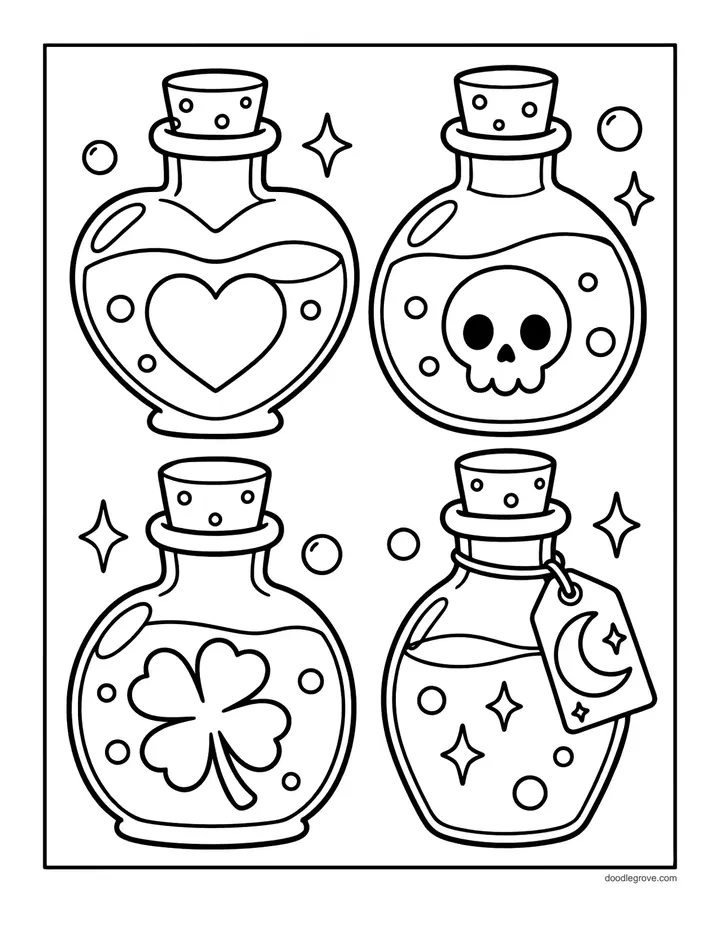
Potions are the one spot where there are no rules at all. Let kids mix a glowing lime green in one bottle, a bubbly purple in the next and a hot pink in another, and add a few white dots for sparkles. The Four Potion Bottles page above is built for exactly this kind of free color play. For witch characters, Little Witch and Her Cauldron gives you a whole scene with a cat and candy to color, Witch Girl with a Pumpkin Wagon adds a night sky and a cart of pumpkins, and Little Witch with a Wand is another single witch to color.
How to color bats and the night sky
Bats look best when their black is not flat. Instead of pressing hard with a black crayon from the start, color the wings a dark purple or brown first, then go over the edges with black. That little bit of color underneath keeps the bat from turning into a solid dark shape with no detail. A soft gray belly and two tiny white dots for eyes finish it off.
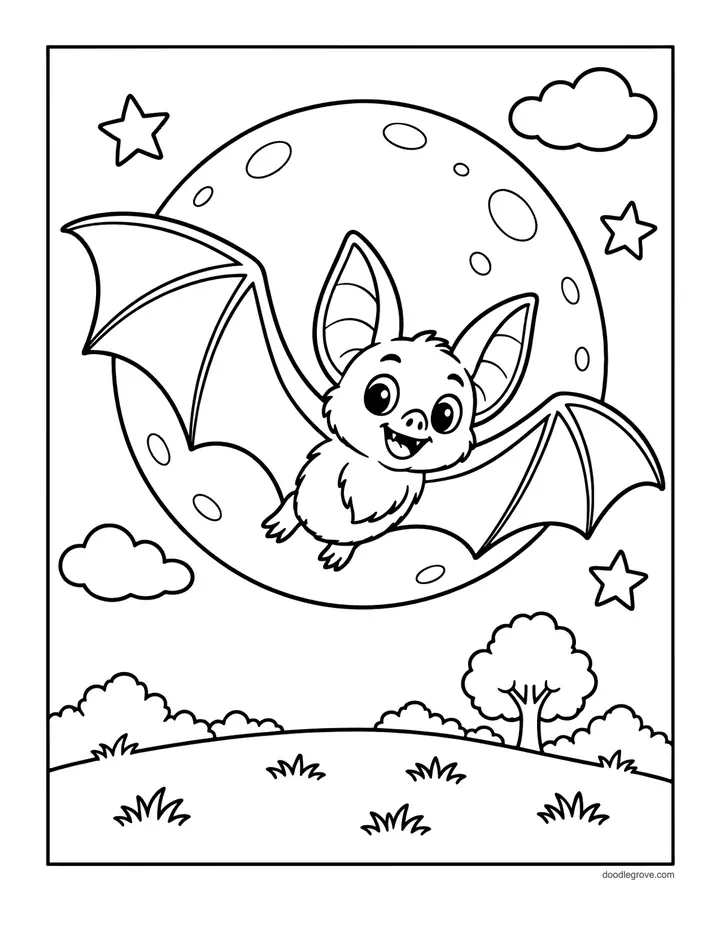
The night sky behind a bat is its own small lesson. Color the moon a pale yellow with a soft orange ring around the outside so it looks like it is glowing, then fill the sky with deep purple or blue around it. Leave the stars white and untouched so they stand out. The Bat Flying Past the Moon page above has a big moon made for this, and Bats Across the Full Moon gives you several bats to try it on. The Simple Smiling Bat is an easy starting point for little hands. For kids who want to know more about the real animals while they color, our bat facts for kids post is a fun read.
Candy corn and a whole Halloween scene
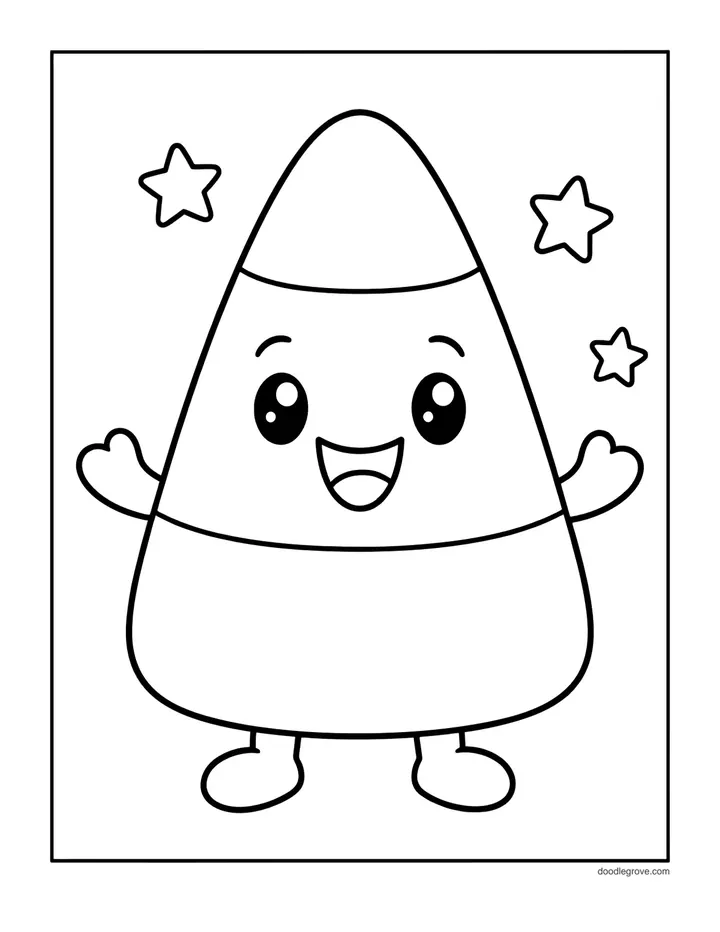
Candy corn is the simplest color exercise on any Halloween page: a white tip, an orange middle and a yellow base, in three clean bands. It is a lovely way to teach kids to keep colors inside their areas, and the Candy Corn Buddy page turns that little pattern into a cheerful character.
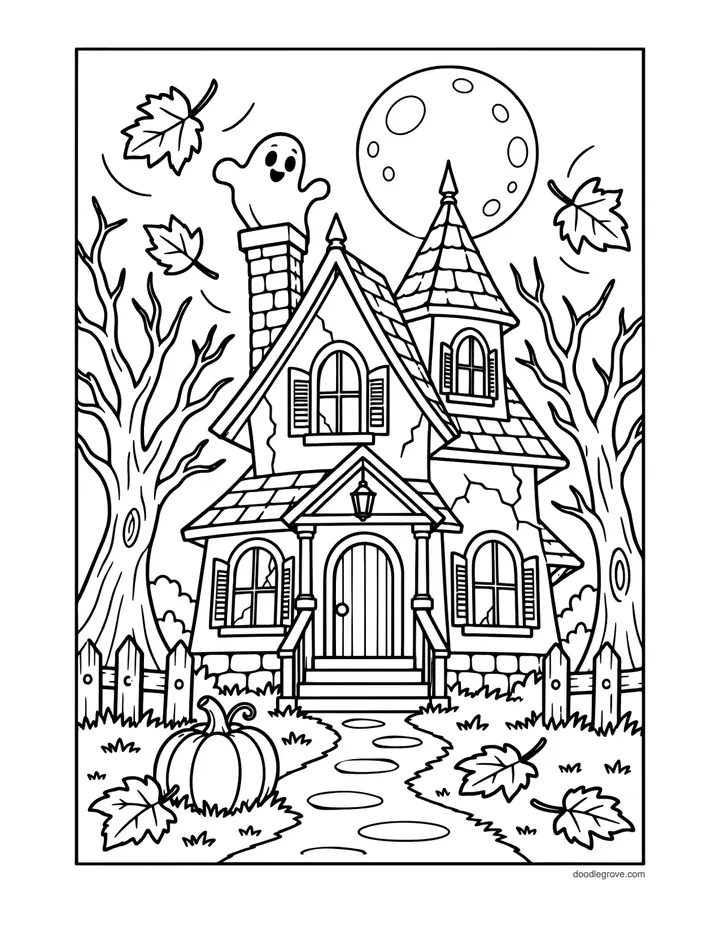
Once your child is comfortable with each subject, a busy scene lets them use the whole palette at once. Pick out the pumpkins in orange, the sky in purple, the moon in yellow and the ghost in pale gray, and the picture holds together because every color has a job. The Autumn Haunted House below is a perfect final project, and the Pumpkins and Jack-o’-Lanterns page is a calmer scene full of fall shapes to practice your oranges and browns.
Before you start a big page, it is worth a quick look at our printing guide so the lines come out crisp and dark, which makes shading inside them much easier.
FAQ
What coloring tools work best for these Halloween palettes?
Colored pencils are the most forgiving, because you can press light or hard to get both the base color and the shadow from one pencil. Crayons are great for bold, fast coloring with younger kids, and markers give the brightest fill for potions, candy and glowing moons. A mix of all three on one page is completely fine.
How do I color a white ghost without leaving it blank?
Keep the middle of the ghost white, but trace the outline and the bottom curves with a pale gray or soft blue, and add a little of that same color under the arms and chin. Then color the background dark or bright so the pale ghost stands out against it.
Do my kids have to follow the Halloween color palette exactly?
Not at all. The palette is a starting point, not a rule. Potions, candy and monsters can be any color, and a purple pumpkin or a rainbow bat is a perfectly good choice. The palette is most useful when a child feels stuck and wants a quick, reliable place to begin.
How do I keep dark Halloween colors from looking muddy?
Muddy color usually comes from pressing too hard too soon. Start every area light, build up slowly, and leave a highlight unshaded. For blacks, lay down a dark purple or brown first and add black only at the edges, so the shape keeps some depth instead of turning into a flat blob.
What colors make a jack-o’-lantern look like it is glowing?
Color the carved eyes and mouth bright yellow, then add a thin ring of orange around each opening so the light looks like it is spilling onto the pumpkin. A slightly darker orange in the grooves of the pumpkin body makes the glow stand out even more.
More Halloween coloring pages
- Pumpkin Coloring Pages: jack-o’-lanterns, pumpkin patches and friendly carved faces to practice orange shading (17 pages).
- Ghost Coloring Pages: friendly ghosts with pumpkins, potions and dark skies to color behind them (17 pages).
- Witch Coloring Pages: witches, cauldrons and bright potion bottles for your whole palette (19 pages).
- Bat Coloring Pages: cute bats, full moons and night scenes for layered blacks and soft glows (18 pages).
- Halloween Coloring Pages: mixed pages with candy corn, pumpkins, ghosts and more to color (18 pages).
- Haunted House Coloring Pages: detailed houses and scenes to pull your colors together (25 pages).

Hung designs T-shirt artwork for a living and prints coloring pages for his own kids at home. Every page on DoodleGrove is prepared for print the same way he prepares work for his clients.