 DoodleGrove
Why Are Black Cats a Halloween Symbol? A Kid Friendly Answer for Parents
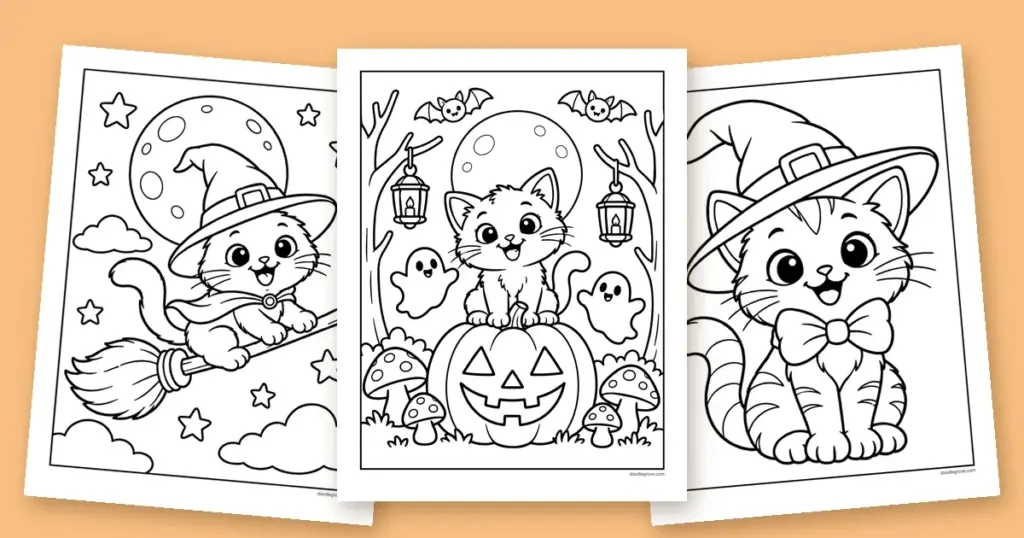
Every October, children spot the same shadowy little animal on cards, candy buckets and classroom walls, and sooner or later they ask why are black cats Halloween regulars. This guide gives you a calm, kid friendly answer you can share at the dinner table, traces where the idea really came from, and pairs each part of the story with a free black cat coloring page your child can print and color.
Every coloring page linked here is free to print with no sign-up, sized for both US Letter and A4 paper. If you are new to printing our pages, the printing guide walks you through paper and sizing in a minute.
The short answer: why black cats mean Halloween
Here is the version you can give a curious six-year-old. Hundreds of years ago, some people in Europe believed that witches kept black cats as magical helpers, and even that a witch could turn herself into one. Halloween itself grew out of an old autumn festival about spirits and the dark half of the year, so the black cat, a creature people already linked with witches and night, slipped naturally into the picture. The frightening beliefs are just old stories now, but the black cat stayed on as a friendly Halloween mascot.
That is the whole answer in a nutshell, and for many younger children it is plenty. If your child keeps asking, the sections below unpack each piece of the story so you can go as deep as their questions take you.
Halloween began as Samhain, a night for spirits
Long before trick-or-treating, the Celts of ancient Ireland and Britain held a festival called Samhain at the start of their new year, around the end of our October. People believed that on that one night the line between the living and the dead grew thin, and that spirits could wander the earth. To avoid being recognized by those spirits, some folk wore masks and disguises, an early seed of today’s costumes. Centuries later the evening before All Saints’ Day, the 31st of October, became All Hallows’ Eve, which we now shorten to Halloween.
That older idea of a spooky night full of unseen spirits is the stage onto which the black cat walks. Once you picture a dark, uncertain evening when anything might be more than it seems, it is easy to see how a silent cat in the shadows earned a mysterious reputation.
Why the Middle Ages tied black cats to witches
During the Middle Ages, many people in Europe grew afraid of cats because they connected them with witchcraft. A common belief held that a witch could turn herself into a black cat, so a black cat slipping through the dark might be a witch in disguise. People also believed in familiars: animal helpers that a witch was said to keep, running errands and doing mischief on her behalf. The black cat became the best known familiar of all, which is why cats, pointed hats and broomsticks still travel together in Halloween art today.
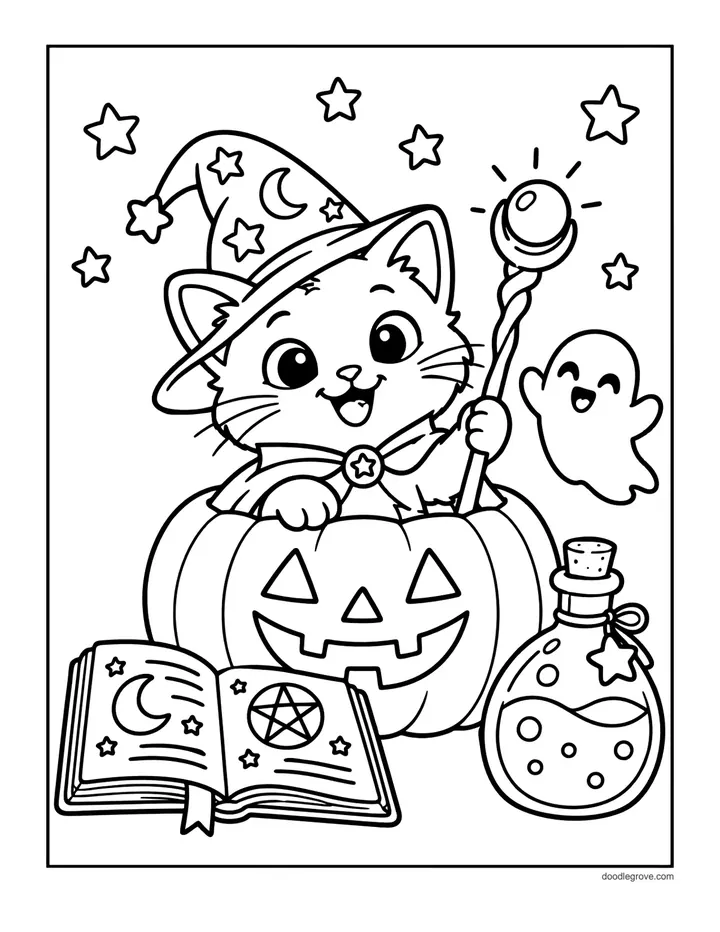
These fears were strongest in Europe and the Americas between roughly the 14th and 18th centuries, the long stretch of witch hunts and trials, and European settlers carried the superstition across the ocean to North America. The gentler, cartoon version of that history is easy to color with the Witch Cat and Pumpkin page, where a hatted kitten simply keeps a jack-o’-lantern company.
Why a black cat fits the Halloween look
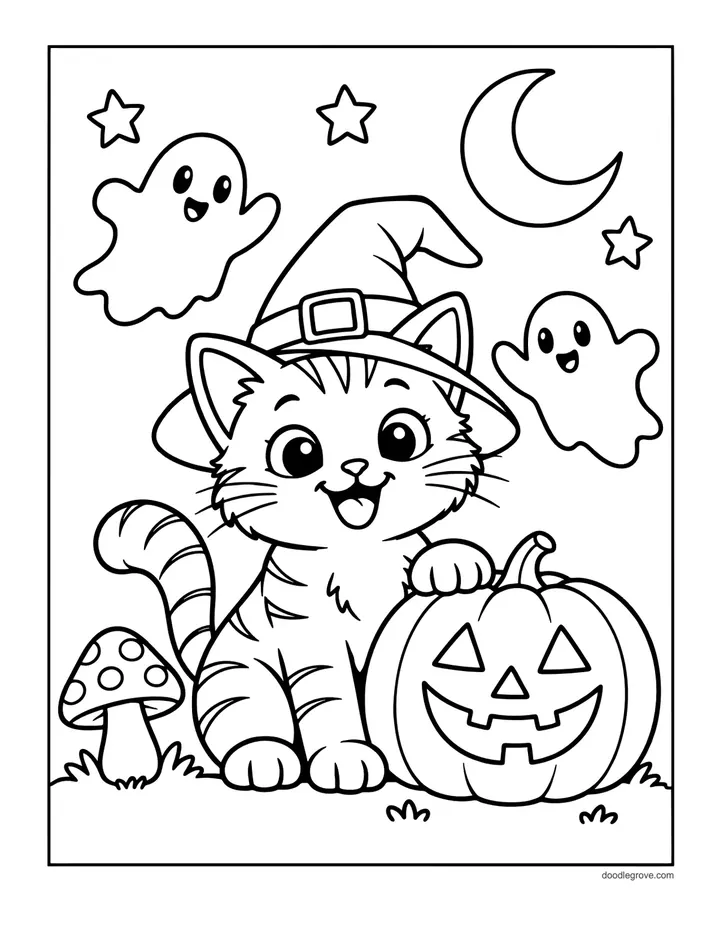
There is a simpler reason black cats suit the season, too: they match its colors. Halloween lives in blacks, oranges and deep night-sky blues, and a black cat melts into that palette the way a pumpkin pops out of it. A cat curled on a glowing jack-o’-lantern under a full moon is almost a Halloween card on its own. When a holiday needs an animal that reads as mysterious at a glance, a dark cat with bright eyes does the job in a single silhouette.
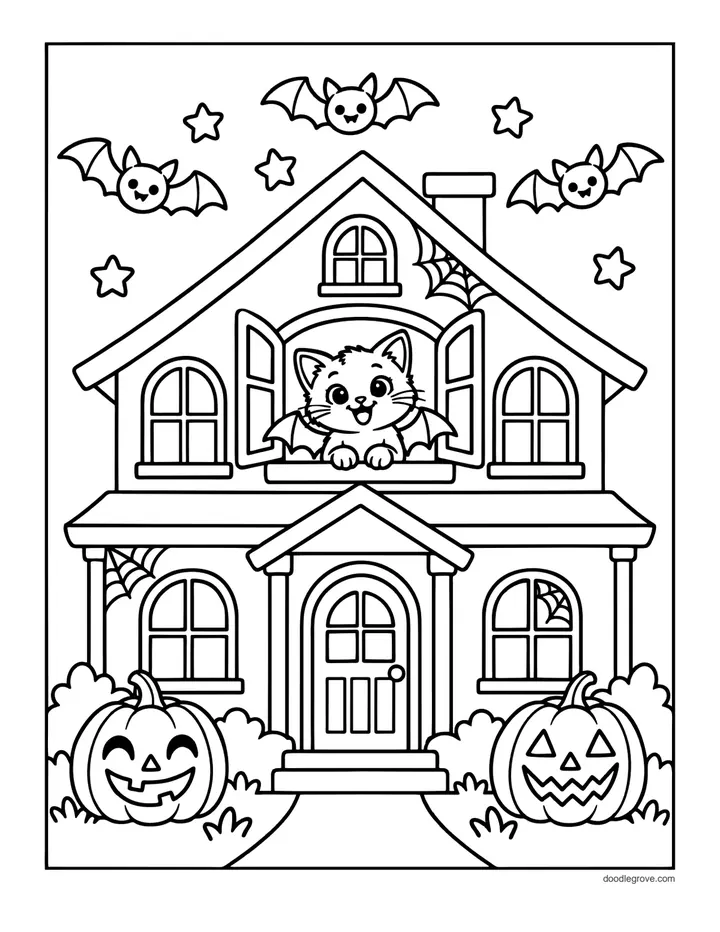
If your child wants to shade a night scene without it turning flat or muddy, our Halloween color palette guide shows how to layer dark colors. Pages like Kitten on a Pumpkin at Night and Peekaboo Pumpkin Kitten lean into that moonlit mood, while Bat Wing Kitten adds the other classic creature of the night.
In many places, a black cat means good luck
Here is the part that surprises most kids: not everyone thinks a black cat is unlucky. In Scotland, tradition says a black cat arriving at your door brings good fortune, and in Japan black cats are seen as a sign of good luck. Sailors once kept black cats aboard their ships for protection on long voyages. So the very same animal is a bad omen in one country and a lucky charm in another.
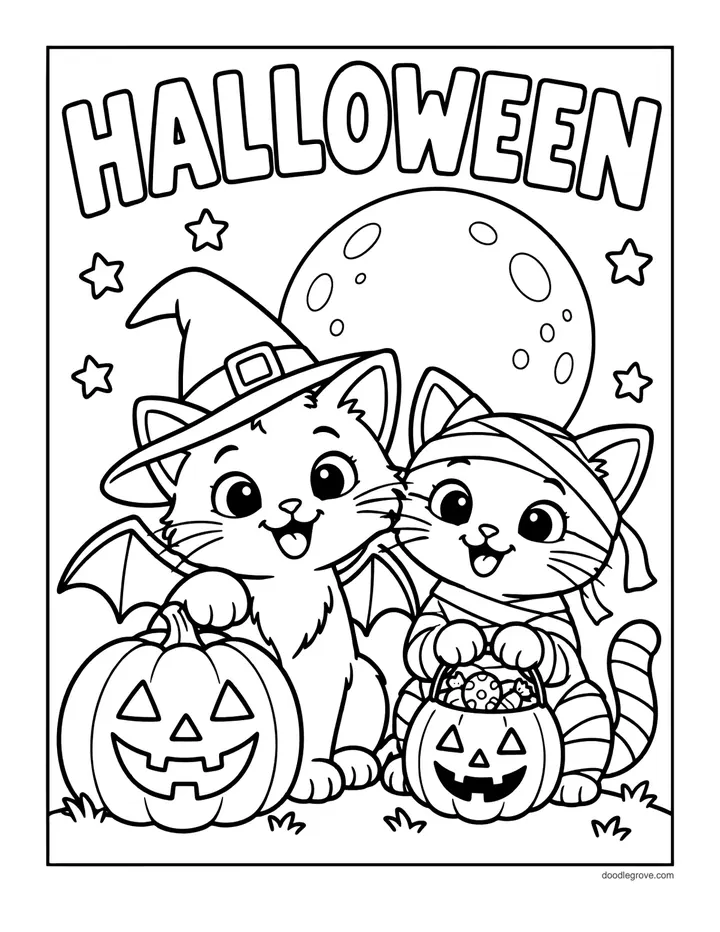
That split is a lovely way to show a child that superstitions are made by people, not by cats. The same black kitten could be feared on one street and welcomed on the next, depending only on which old story the neighbors grew up hearing.
The real story: a black cat is just a friendly cat
Strip away the folklore and a black cat is exactly what it looks like: an ordinary cat whose fur happens to be black, the same purring, nap-loving pet as a tabby or a calico. Many kinds of cats can be born black, and a black kitten is no more magical or unlucky than any other. Around Halloween it is worth reminding children that real black cats are gentle animals that deserve kindness, not fright, and that the spooky pictures are just for fun.
Color the black cat story
Pick a page that matches your child’s mood and skill. Easy pages have big, simple shapes for little hands, while detailed pages give older kids and adults more to shade. Every page below is free to print.
| Coloring page | Level | Best for |
|---|---|---|
| Kitten in a Witch Hat | Easy | Younger kids |
| Kittens and the Pumpkin Tower | Easy | Younger kids |
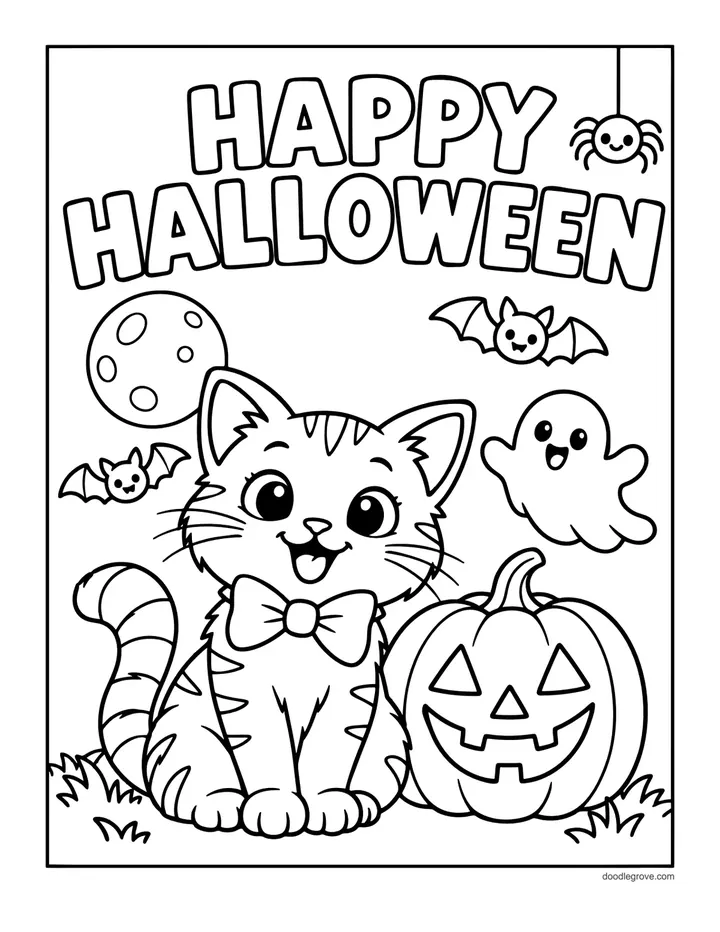
| Happy Halloween Cat | Medium | All ages |
| Witch Kitten on a Broomstick | Medium | All ages |
| Witch Cat and Pumpkin | Medium | All ages |
| Kitten on a Pumpkin at Night | Medium | All ages |
| Kitten Wizard with a Spell Book | Medium | All ages |
| Peekaboo Pumpkin Kitten | Medium | All ages |
| Bat Wing Kitten | Medium | All ages |
| Kitten in the Window | Detailed | Older kids and adults |
| Trick-or-Treat Kittens | Detailed | Older kids and adults |
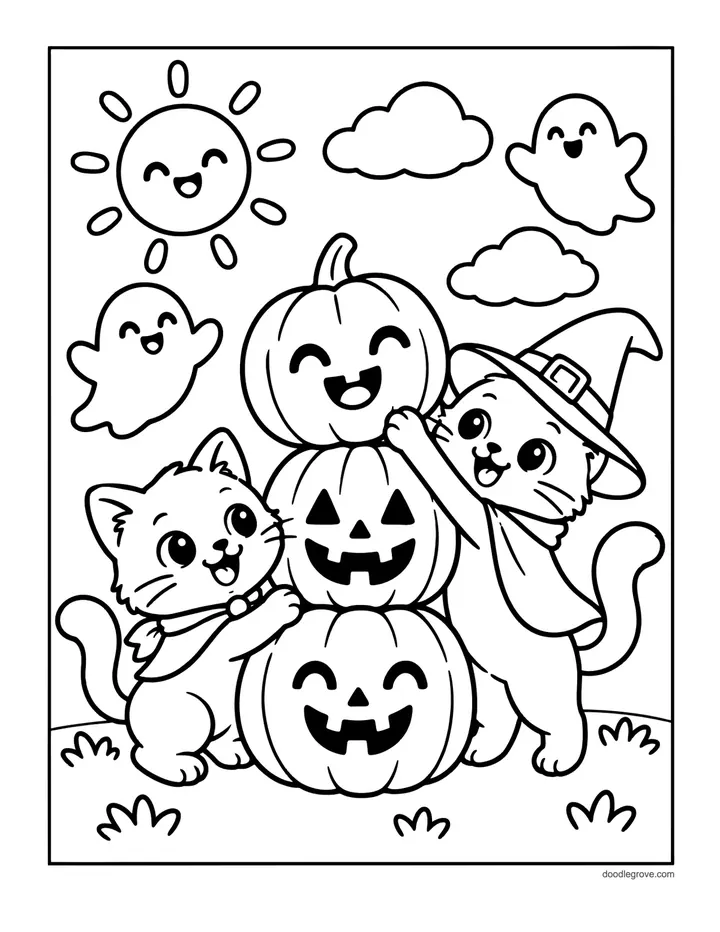
For a quick activity, print three pages and sort them into a spooky-story pile and a just-a-cute-cat pile, then talk about which beliefs are real and which are only old tales. Younger artists can start with the sticker-style Nine Little Ghosts or a single Happy Halloween Jack-o’-Lantern, while a group can color the busy Halloween Icons for Little Kids sheet together. For more black cat scenes, try Kitten Behind the Jack-o’-Lanterns, Polka Dot Witch Cat, Witch Cat Hugging a Pumpkin and Happy Halloween Broomstick Kitten.
If your family enjoys the facts behind the season, our bat facts for kids post explores another misunderstood Halloween animal.
FAQ
Why do people say a black cat crossing your path is bad luck?
The idea comes from medieval Europe, where people feared that a black cat might be a witch in disguise or her magical helper. If one crossed your path in the dark, the superstition said trouble could follow. It is only an old belief, not a fact.
Is a black cat ever a sign of good luck?
Yes. In Scotland a black cat at your door is said to bring good fortune, and in Japan black cats are considered lucky. Sailors even kept them aboard ships for luck and protection.
What is a witch’s familiar?
A familiar was an animal that people long ago believed a witch kept as a helper. Black cats were the most famous familiars, which is how they ended up beside witches in so many Halloween pictures.
How do I talk about these superstitions without scaring my child?
Frame them as very old stories, a bit like fairy tales, and point out that real black cats are gentle pets. Coloring a happy cat page together keeps the mood light while you explain where the spooky idea came from.
Do we have to color the cat black?
Not at all. The pages are plain outlines, so your child can make a purple cat, a rainbow cat or a classic black one. If you do want a black cat whose face still shows, color with dark grey or deep blue first and leave a few thin white lines for whiskers and shine, rather than pressing black over everything.
More black cat and Halloween coloring pages
- Black Cat Coloring Pages: witch kittens, moonlit pumpkins and trick-or-treat scenes (26 pages)
- Pumpkin Coloring Pages: jack-o’-lanterns and pumpkin patches to pair with your cats (17 pages)
- Ghost Coloring Pages: friendly ghosts for the spookier half of the story (17 pages)
- Halloween Coloring Pages: a mix of haunted houses, candy and classic Halloween icons (18 pages)
Sources: Britannica: Why Are Black Cats Unlucky, Britannica: Halloween, Britannica: Where Did Halloween Come From.

Hung designs T-shirt artwork for a living and prints coloring pages for his own kids at home. Every page on DoodleGrove is prepared for print the same way he prepares work for his clients.