 DoodleGrove
Why Do Leaves Change Color? The Science Behind Fall Leaves for Kids
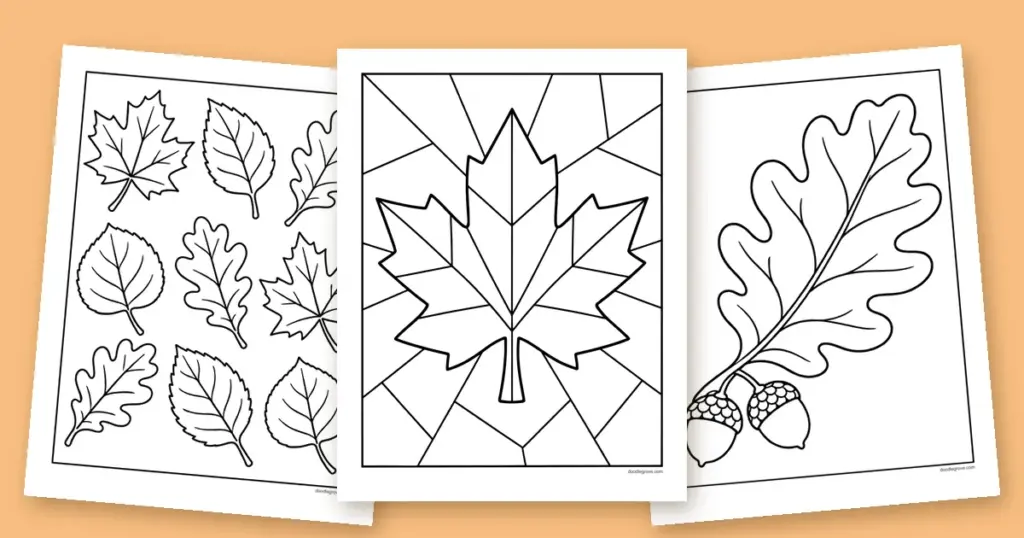
If your child has ever held up a bright red maple leaf and asked why do leaves change color, this post gives you a simple, accurate answer you can share in a minute or two, along with free leaf pages to color while you talk about it. It is written for parents and teachers who want the real science in kid friendly words, not a vague one liner.
Every coloring page here is free to print with no sign-up, sized for both US Letter and A4, so you can print one at home or a class set at school.
The short answer: why leaves change color
Leaves are green all summer because they are full of a pigment called chlorophyll, which the tree uses to turn sunlight into food. When the days get shorter and the nights get longer in autumn, the tree slows down and then stops making chlorophyll. As the green fades, yellow and orange colors that were hidden in the leaf all along finally show through, and some leaves make brand new red and purple colors on top of that. That is the whole story in a nutshell, and the rest of this post unpacks each part so you can explain it to a curious child and color along as you go.
Leaves are green because of chlorophyll
Hold a green leaf up to the light in July and you are looking at millions of tiny food factories. Inside every leaf is a green pigment called chlorophyll. Chlorophyll catches energy from sunlight and uses it to turn water and the air the tree breathes into sugar, the food the tree needs to grow. This food making is called photosynthesis, and it is the reason trees grow leaves in the first place.
Chlorophyll is such a strong, bright green that it hides every other color in the leaf. All spring and summer the tree keeps making fresh chlorophyll as fast as the old chlorophyll wears out, so the leaves stay a steady green. A simple way to say it to a child: the leaf is green because it is busy making food.
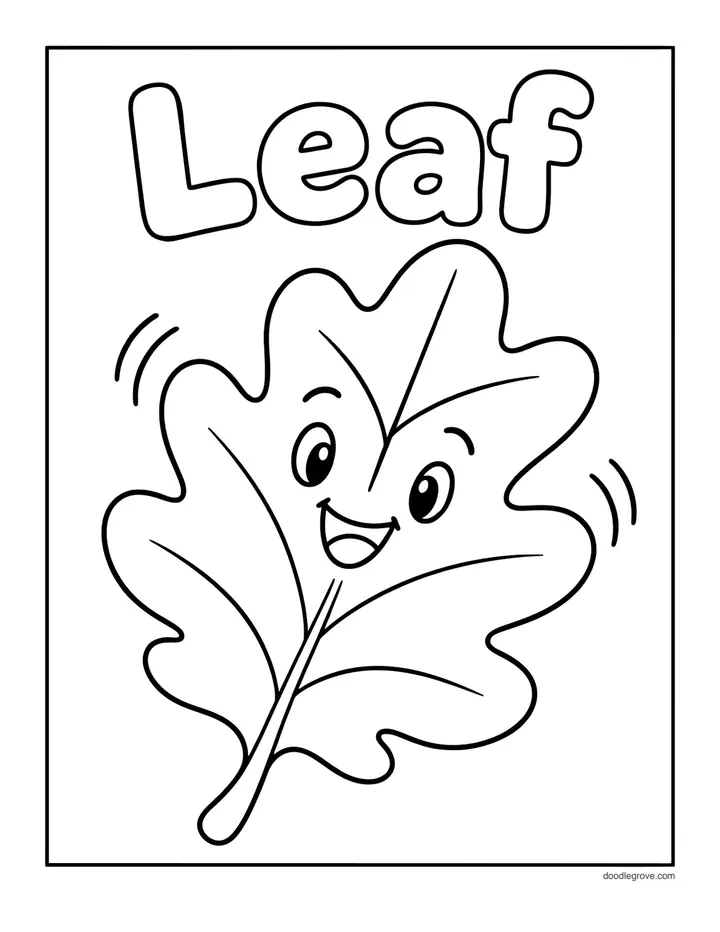
Fall uncovers the hidden yellows and oranges
As summer ends, the days get shorter and the nights get longer. That growing stretch of darkness, even more than the cold, is the signal the tree reads. It stops making chlorophyll, and the green that was there starts to break down and disappear.
Underneath the green were other pigments that had been in the leaf the whole time, simply masked. These are called carotenoids, and they give leaves their yellow and orange. They belong to the same family of colors that make carrots orange and corn yellow. Once the green fades, those warm colors finally show through, which is why so many trees glow gold in autumn. The orange you see in a ripening pumpkin comes from the very same kind of pigment being uncovered; our pumpkin life cycle for kids post follows that same change on the vine.
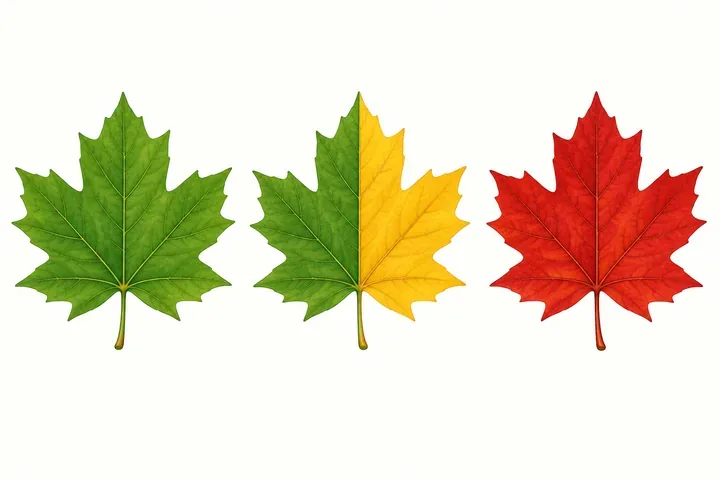
Where the fiery reds, purples and browns come from
Yellow and orange are uncovered, but the bright reds and deep purples work differently: the tree makes them fresh in autumn. As the leaf gets ready to drop, the tiny veins that carry food in and out begin to close, and sugar gets trapped inside the leaf. On warm sunny days the leaf makes lots of sugar, and on cool nights that sugar cannot move away. The leaf turns the trapped sugar into brand new red and purple pigments called anthocyanins. That is why a run of warm sunny days and cool, crisp nights gives the most brilliant red displays, and why the same tree can glow brighter one year than the next.
Brown is the quiet end of the story. After the other pigments have broken down, what is left are bitter compounds called tannins. Oak leaves are especially full of tannin, which is why many oaks turn a leathery red-brown or a plain brown instead of a bright color, above all in a cold, wet, overcast fall.
Which trees make red, yellow and brown leaves
Once kids know the three color stories, it is fun to match them to real trees on your street or in the park:
- Maples put on the big reds and oranges. A red maple can turn brilliant scarlet, while a sugar maple glows orange-red.
- Aspens, birches and poplars turn a clear, cheerful golden yellow.
- Oaks lean toward red-brown, russet and brown, thanks to all that tannin.
- Sweetgum can wear several colors at once, from yellow through red to deep purple.
Our Leaves of North American Trees page sets eight labeled leaves side by side, so children can color each one the shade its tree really turns. The More Leaf Shapes page adds ten more leaves to name and color, from magnolia and ash to elm and poplar.
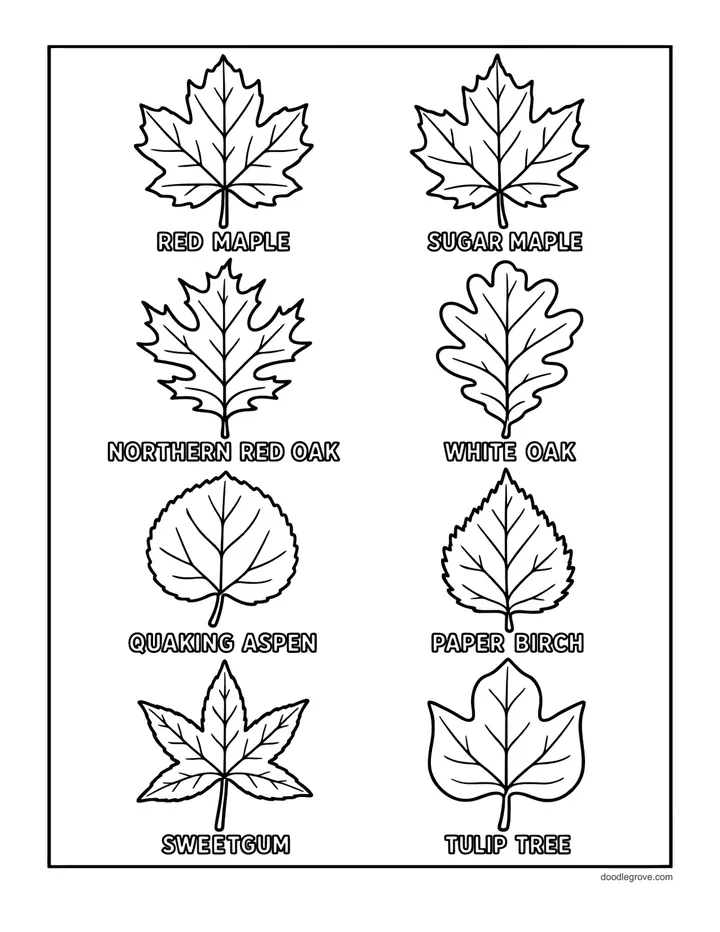
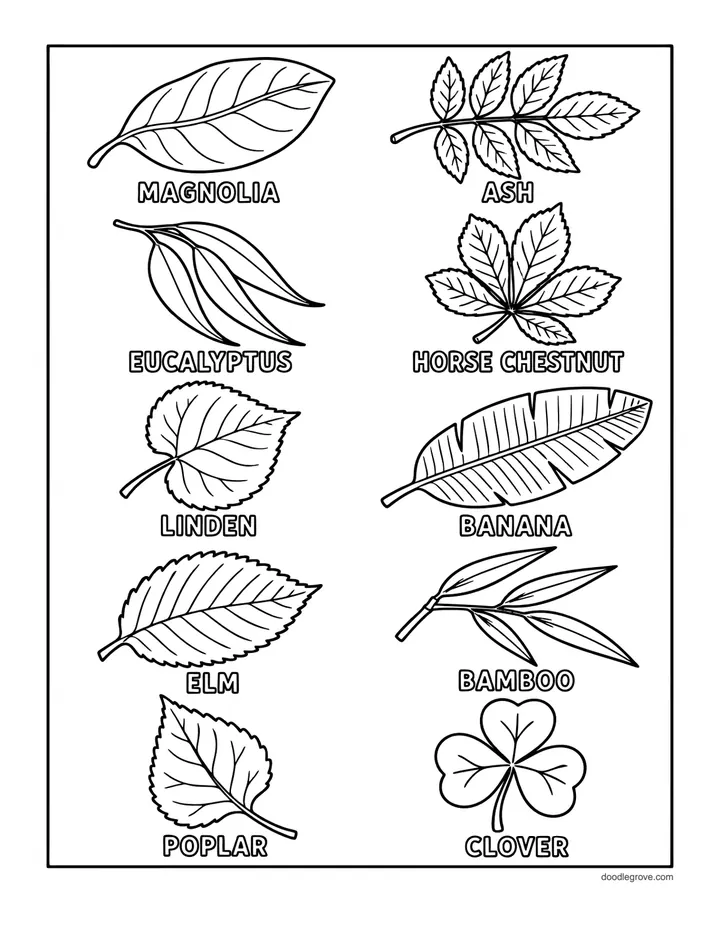
Color the leaves in their true fall colors
Knowing the science makes coloring more fun, because now there is a reason behind every crayon. Try this: color one copy of a leaf summer green, then a second copy in its autumn color, and set the two side by side to show the change. On a page packed with leaves, let a child give each leaf a different real color and talk about which tree it might come from and why.
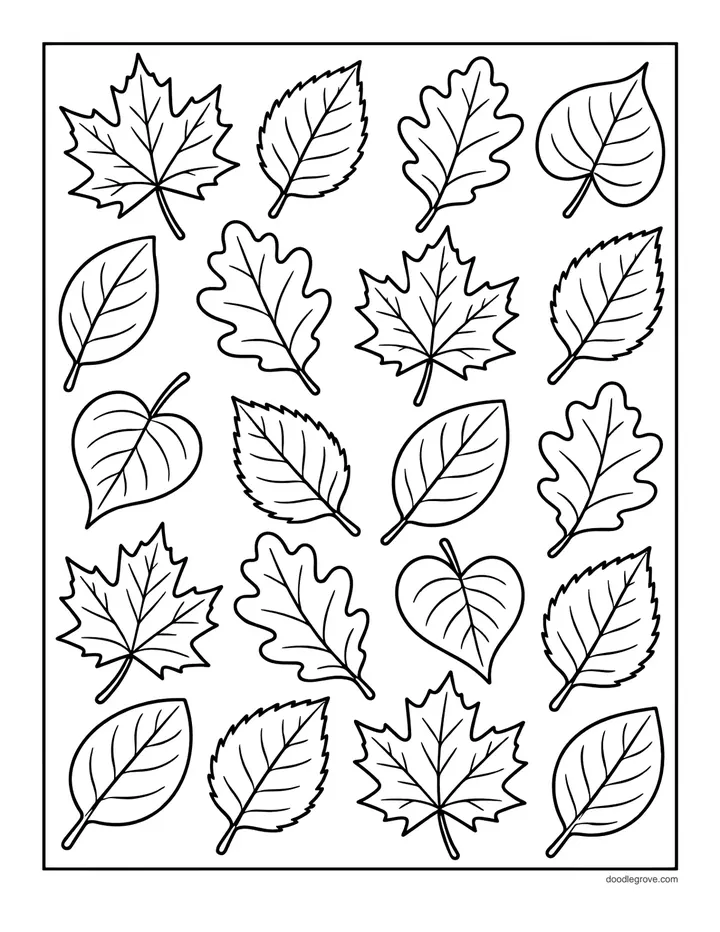
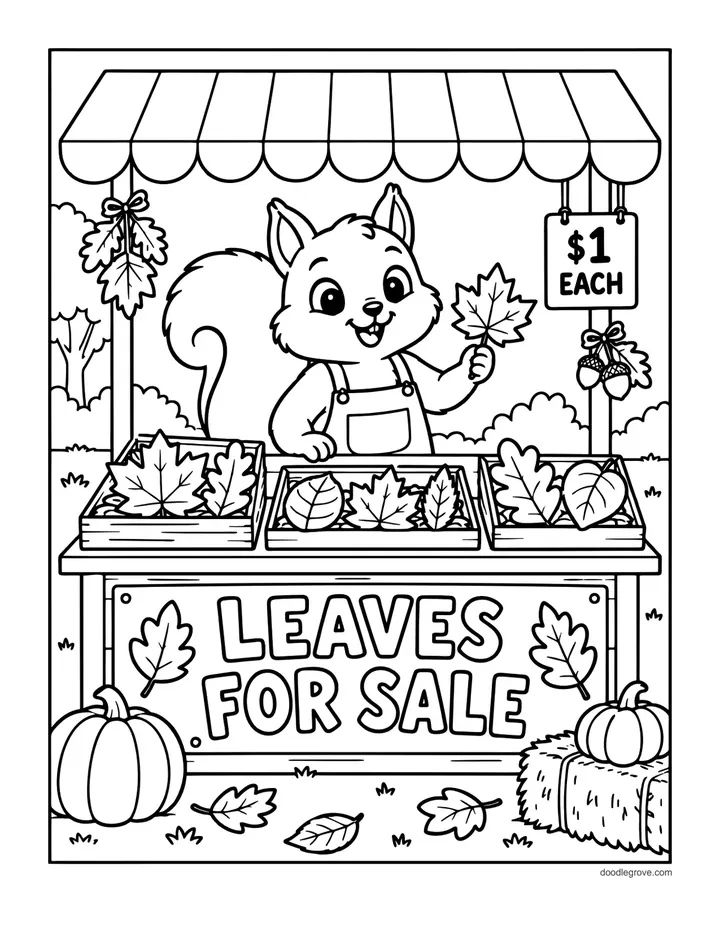
Older kids and adults who like a challenge can color the detailed Leaves for Sale scene, with its baskets of leaves and a busy squirrel shopkeeper. For the crispest lines and the best colors, print on the brightest white paper you have; our printing guide walks through the simple settings.
Color a whole autumn day
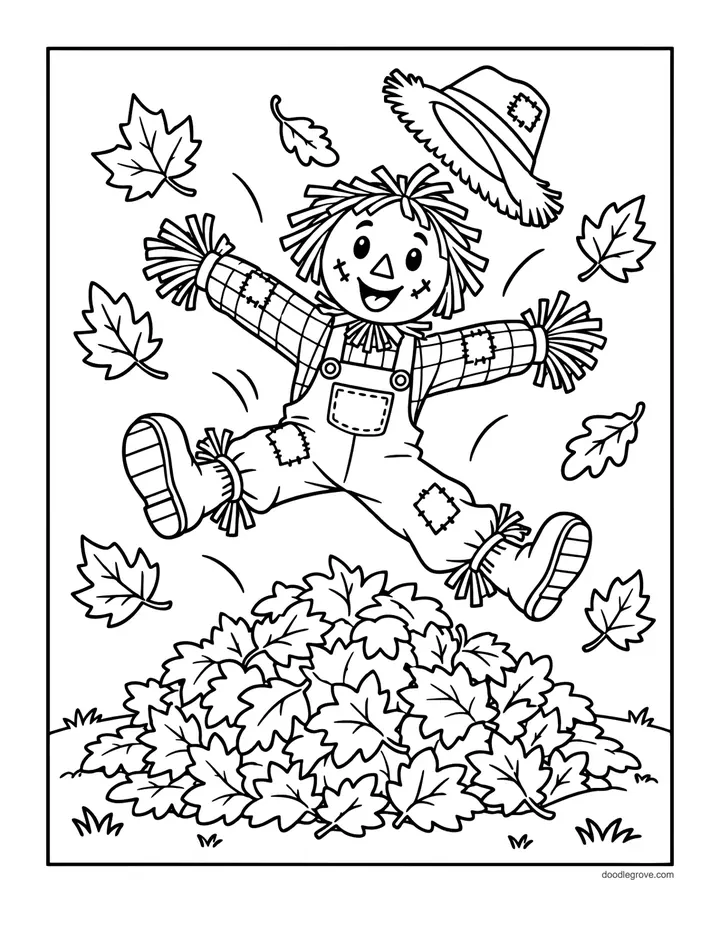
Leaves do not fall in an empty world, so round out the lesson with the rest of an autumn scene. A scarecrow leaping into a leaf pile shows what all those fallen leaves are good for once they reach the ground, and an owl gliding through drifting maple leaves is a reminder that the long nights that change the leaves also belong to the night birds.
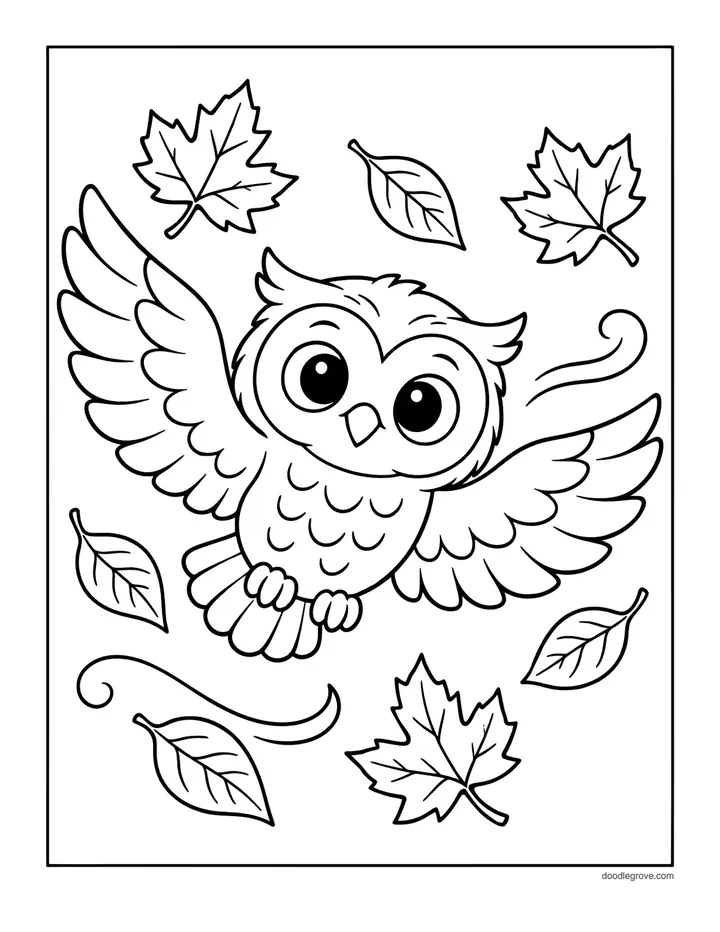
Teachers who want more leaf, scarecrow and owl pages built into ready made stations can use our fall activities for kindergarten, which turns these same autumn themes into low-prep centers.
Fall leaves FAQ
When do leaves usually start to change color?
In most of the northern United States and the UK, the show begins in early autumn and builds over a few weeks. The exact timing shifts from place to place and from year to year, because it depends on how far north you are and on the weather, so the trees near you may turn earlier or later than a friend’s a few hours away.
Is it the cold or the shorter days that changes the leaves?
Mostly the shorter days, or really the longer nights. The steady growth of darkness is the main signal that tells the tree to stop making chlorophyll. Temperature matters too, but it mostly changes how bright the colors get, not whether the leaves change at all.
Why are some autumn seasons much brighter than others?
Weather. A warm, wet spring, a kind summer, and then warm sunny days with cool but not freezing nights bring out the most brilliant colors, especially the reds. A cold, wet, overcast fall tends to leave more plain brown instead.
Why do pine trees stay green when the other trees change?
Evergreens like pines and firs have thin needles with a heavy waxy coating that protects them from the cold. Because the needles can survive the winter, the tree keeps them and keeps making a little food all year, so it never has to turn and drop them the way a maple or oak does.
What finally makes the leaves fall off?
As a leaf finishes its work, the tree grows a corky separation layer where the leaf stem meets the branch. That layer seals the branch like a tiny scab and lets the leaf break away, so a gust of wind or the leaf’s own weight carries it to the ground.
More fall coloring pages
- Fall Leaves Coloring Pages: leaf shapes, labeled tree charts and autumn scenes to color (30 pages)
- Scarecrow Coloring Pages: friendly scarecrows in pumpkin patches, cornfields and leaf piles (34 pages)
- Owl Coloring Pages: owls flying through leaves and perched on autumn branches (30 pages)
Sources: U.S. Forest Service: The Science of Fall Colors, Smithsonian: Why Do Leaves Change Color in the Fall, SUNY ESF: Why Leaves Change Color.

Hung designs T-shirt artwork for a living and prints coloring pages for his own kids at home. Every page on DoodleGrove is prepared for print the same way he prepares work for his clients.